Thicker surgical gloves are not automatically the better choice. The appropriate thickness depends on tactile feedback, grip, fit and the protection requirements of the intended task. The same principle applies when selecting polyisoprene (PI) surgical gloves.
Thicker and thinner models serve different design priorities. For buyers, the aim is to understand those differences, compare specifications on a consistent basis and evaluate samples before choosing a product.
Do Thicker Surgical Gloves Always Provide Better Protection?
Thickness is one product specification. It does not, by itself, establish a surgical glove’s overall protective performance.
Material, physical properties, freedom from holes, quality control and the intended use of the specific model also matter. Two gloves with the same thickness should not automatically be considered equivalent.
A randomized prospective study conducted during total knee arthroplasty found that, under its study conditions, thick latex surgical gloves did not demonstrate a superior protective effect against perforation. A thick outer glove also produced lower tactile sensitivity in two-point discrimination testing than conventional double gloving. These findings do not establish how every material or model will perform, but they illustrate why thickness alone is insufficient for selection.
Buyers should therefore assess thickness and supporting performance evidence separately. A thicker design may be relevant to a purchasing requirement, but it should not replace an assessment of the product’s overall properties.
Why Does Tactile Sensitivity Depend on More Than Thickness?
Thickness deserves attention, alongside softness, glove design and fit.
For users, the practical question is whether the glove allows clear tactile feedback and natural movement during the intended task. A lower nominal thickness does not guarantee a better experience if the fingertips fit poorly or excess material interferes with handling.
During sample evaluation, consider:
- Whether the fingertips fit closely without obvious empty space or excess folds.
- Whether bending, extending and pinching movements feel natural.
- Whether the surface provides suitable grip when handling instruments.
- Whether prolonged wear causes noticeable tightness or discomfort.
Record these observations alongside thickness specifications. “Thinner” should not be used as a substitute for an actual assessment of tactile performance.
Which Part of the Glove Should Buyers Compare?
Compare the same measurement location, and confirm how the value and tolerance are specified.
Surgical gloves can have different thicknesses at the fingertip, palm and cuff. A specification stating only “0.21 mm” provides too little information for a meaningful comparison.
| Comparison point | What buyers should confirm |
|---|---|
| Fingertip thickness | Both products use fingertip measurements, rather than comparing one glove’s fingertip with another glove’s palm |
| Palm thickness | How the palm specification relates to the fingertip specification |
| Cuff thickness | The cuff value is assessed separately and is not used to represent the working areas of the glove |
| Type of value | Whether the figure is nominal, a minimum requirement or a result from a particular production lot |
| Tolerance and measurement method | Whether the figures are directly comparable and how permitted variation affects small differences |
A difference between nominal specifications does not mean that every individual glove will differ by exactly that amount. Where values are close, the stated tolerances are particularly relevant.
Small specification differences should not be presented as a quantified improvement in comfort, sensitivity or protection without supporting test evidence.
When Might PI Sensitive Surgical Gloves Be Worth Evaluating?
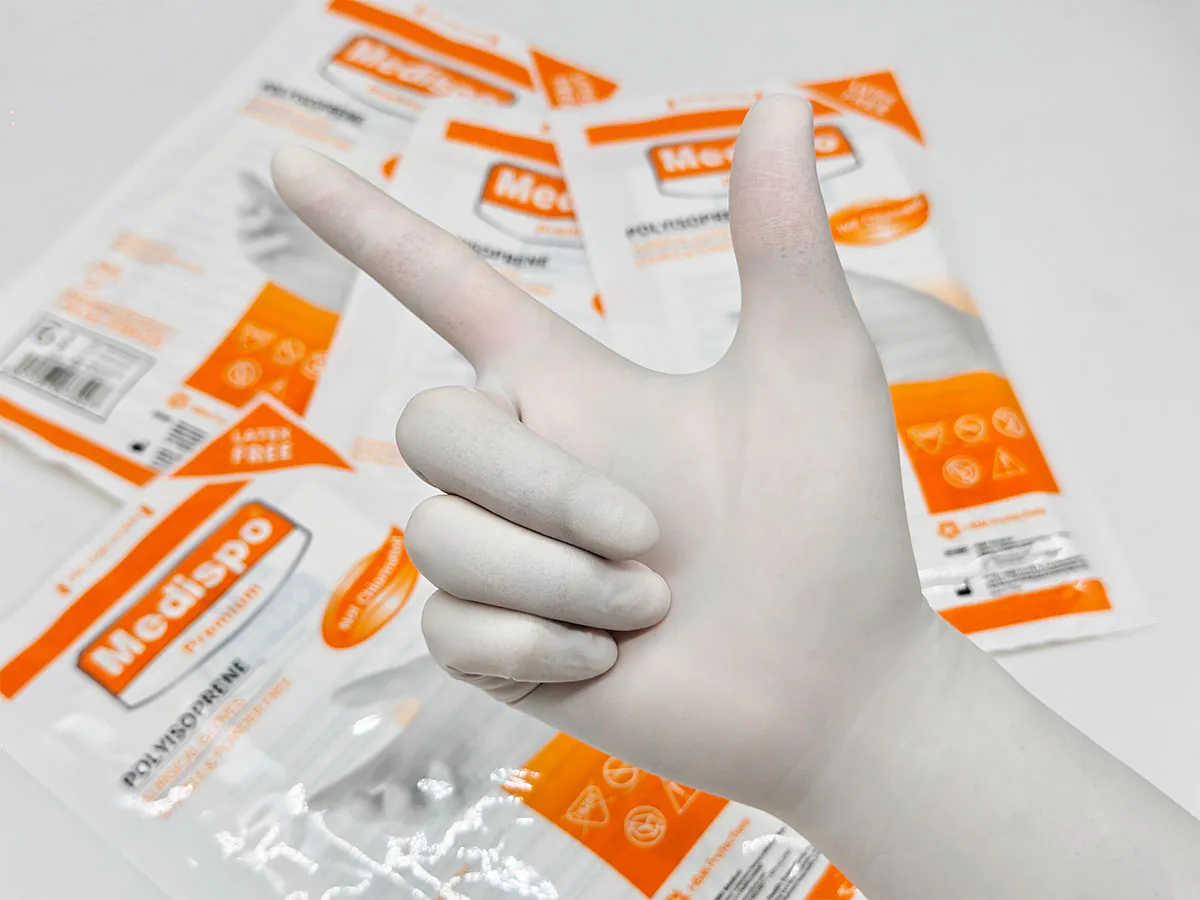
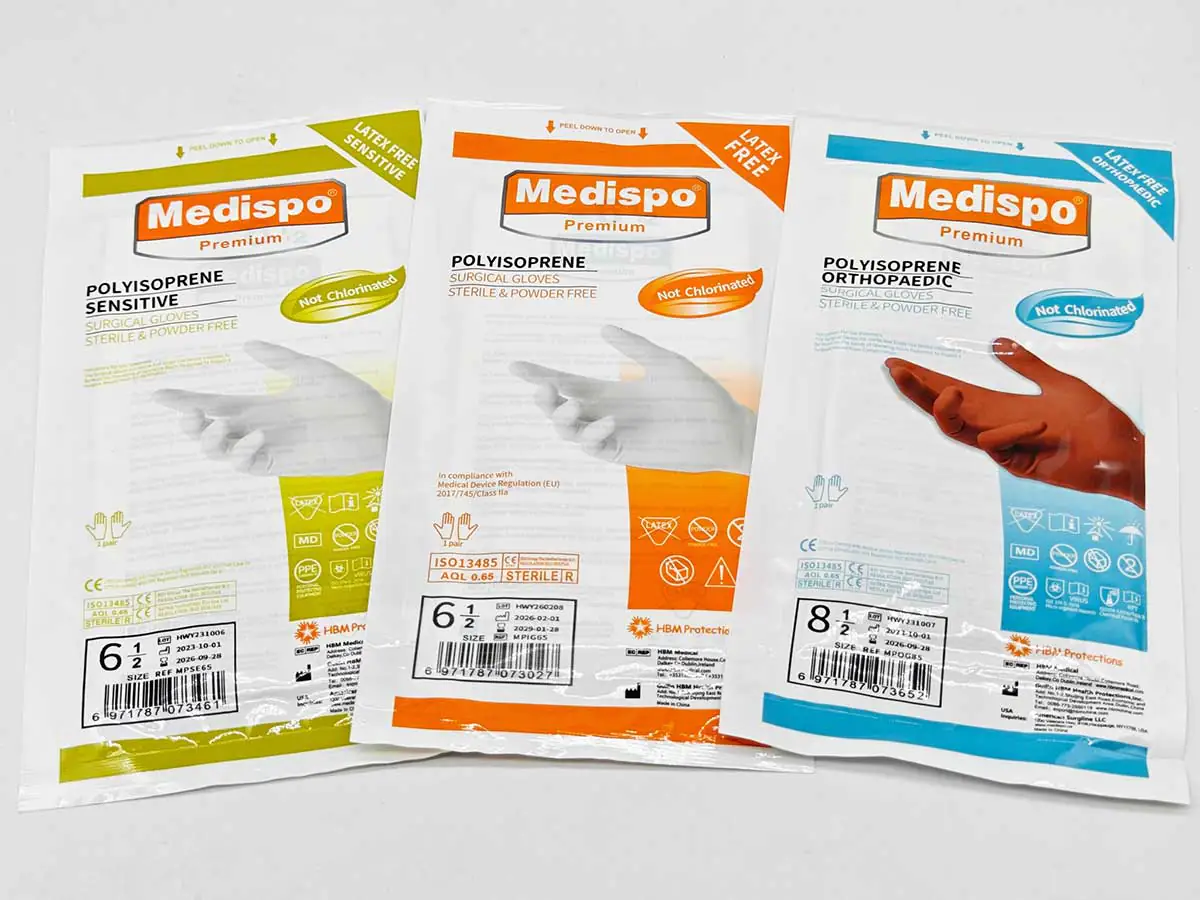
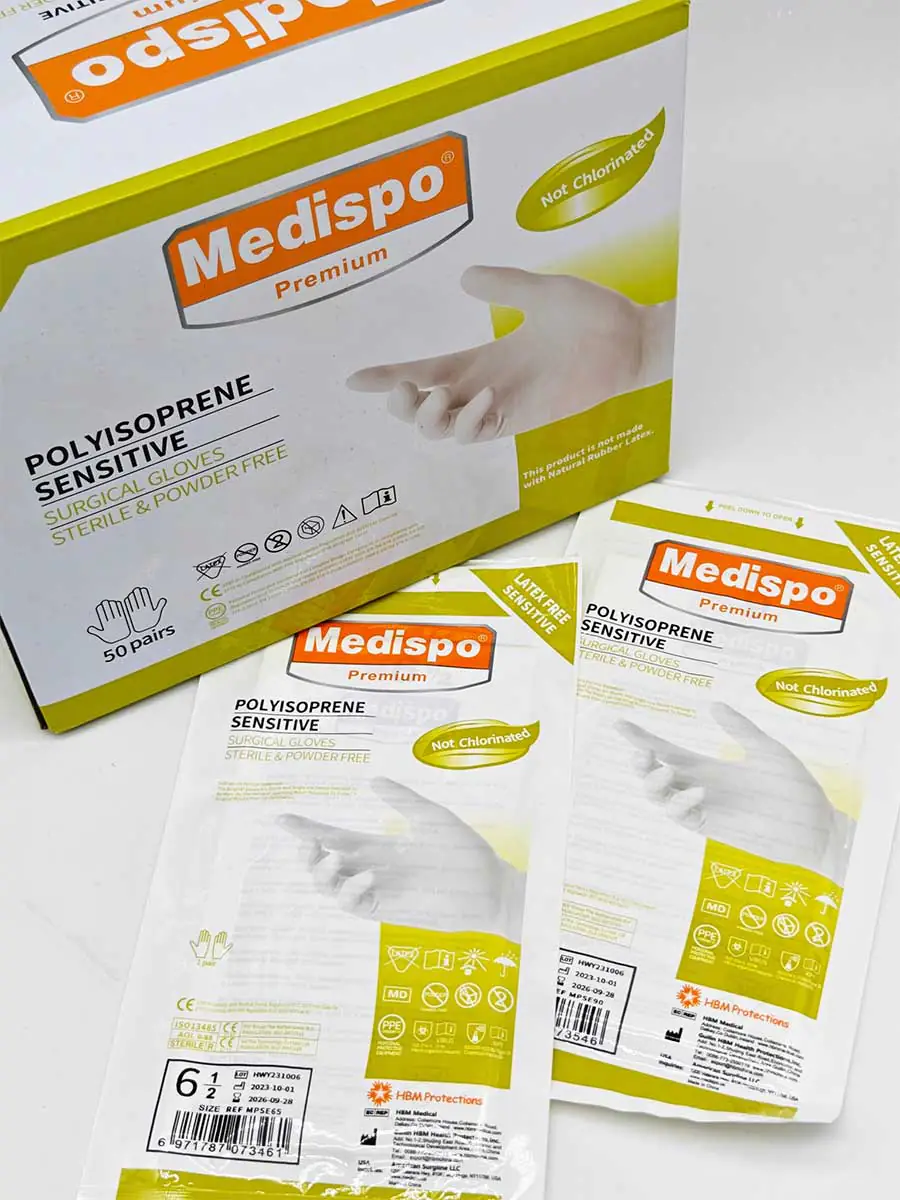
Medispo PI Sensitive surgical gloves are designed with an emphasis on tactile sensitivity and comfort.
According to the Medispo product catalogue, PI Sensitive has a nominal fingertip thickness of 0.21 mm and palm thickness of 0.19 mm. The standard PI model has corresponding nominal values of 0.23 mm and 0.21 mm. The stated thickness tolerance for both models is ±0.03 mm.
This thinner nominal configuration, together with a soft formulation, anatomical design and microtextured surface, reflects the Sensitive model’s tactile-focused positioning.
For users who place particular importance on fine tactile feedback, Sensitive can be included in sample evaluation. Buyers should assess fingertip fit, pinching feedback and instrument handling rather than making a decision from the thickness figures alone.
Made from latex-free polyisoprene, it also provides an option for people with latex allergies. In this product name, “Sensitive” refers to tactile sensitivity; it does not mean that the glove is intended exclusively for sensitive skin or that allergic reactions cannot occur.
When Might PI Orthopaedic Surgical Gloves Be Worth Evaluating?
Medispo PI Orthopaedic is the thickest glove in the PI portfolio described in the product catalogue, with a different design emphasis from PI Sensitive.
Its nominal fingertip thickness is 0.26 mm, and its palm thickness is 0.24 mm, with a stated thickness tolerance of ±0.03 mm.
The model combines a thicker material configuration with an anatomical design and microtextured finish. Its brown colour is designed to reduce glare from surgical lighting.
For buyers considering a more substantial glove construction, PI Orthopaedic can be included in sample evaluation. Alongside thickness, evaluation should cover freedom of movement, instrument grip and comfort during extended wear.
However, a thicker orthopaedic design should not automatically be described as having superior puncture resistance. Any specific performance claim needs evidence for that model and the relevant test conditions.
PI Sensitive, standard PI and PI Orthopaedic illustrate different design priorities. Selection should match the intended task rather than simply rank products from thinnest to thickest.
How Should Different Operating Needs Guide Sample Evaluation?
Start with the experience or requirement the user wants to address, then select suitable products for comparison.
| Operating priority | PI option to include in evaluation | What to assess |
|---|---|---|
| Greater emphasis on fine tactile feedback | PI Sensitive | Fingertip fit, pinching feedback and whether the thinner design suits the user’s handling preferences |
| An overall assessment of routine handling and tactile experience | Standard PI | Fit, grip, softness and freedom of finger movement |
| Greater emphasis on a substantial glove construction and durability requirements | PI Orthopaedic | Handling with the thicker design, grip and supporting model-specific performance information |
| Double gloving | An appropriate inner and outer glove combination | Size pairing, overall fit and handling while wearing both layers |
These are starting points for evaluation. A procedure name or thickness figure alone should not determine the choice for every user. Product instructions, institutional requirements and user feedback remain relevant.
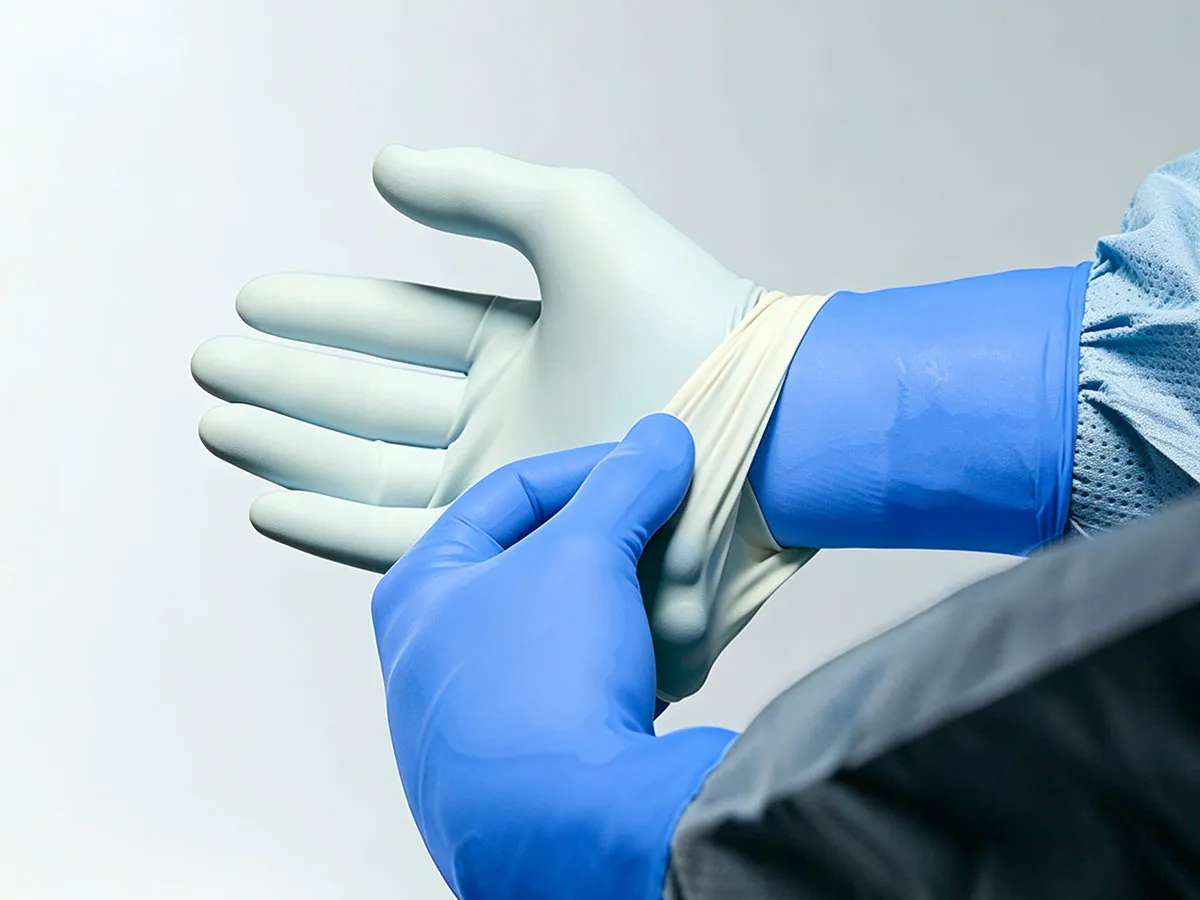
Double gloving also involves more than total thickness. The inner and outer glove combination and the applicable wearing requirements need to be considered. Adding two thickness values together does not establish equivalence with a single thicker glove.
How Can Buyers Compare PI Glove Thickness Before Bulk Purchasing?
Evaluate samples using suitable sizes and consistent tasks.
Buyers can begin with standard PI gloves, then add Sensitive or Orthopaedic models according to the customer’s priorities. Each model should be evaluated in an appropriate size, using the same assessment process.
Record fingertip feedback, instrument grip, ease of donning and comfort during sustained wear separately. This produces more useful information than a general comment such as “thicker” or “thinner.”
For double gloving, record the experience of the complete inner and outer combination as a separate assessment.
The final purchasing decision can then take account of specifications, quality documentation, packaging and supply requirements. For distributors and medical supply companies, this approach also provides a clearer basis for explaining model differences to customers.
How Does HBM Protections Support PI Surgical Glove Selection?
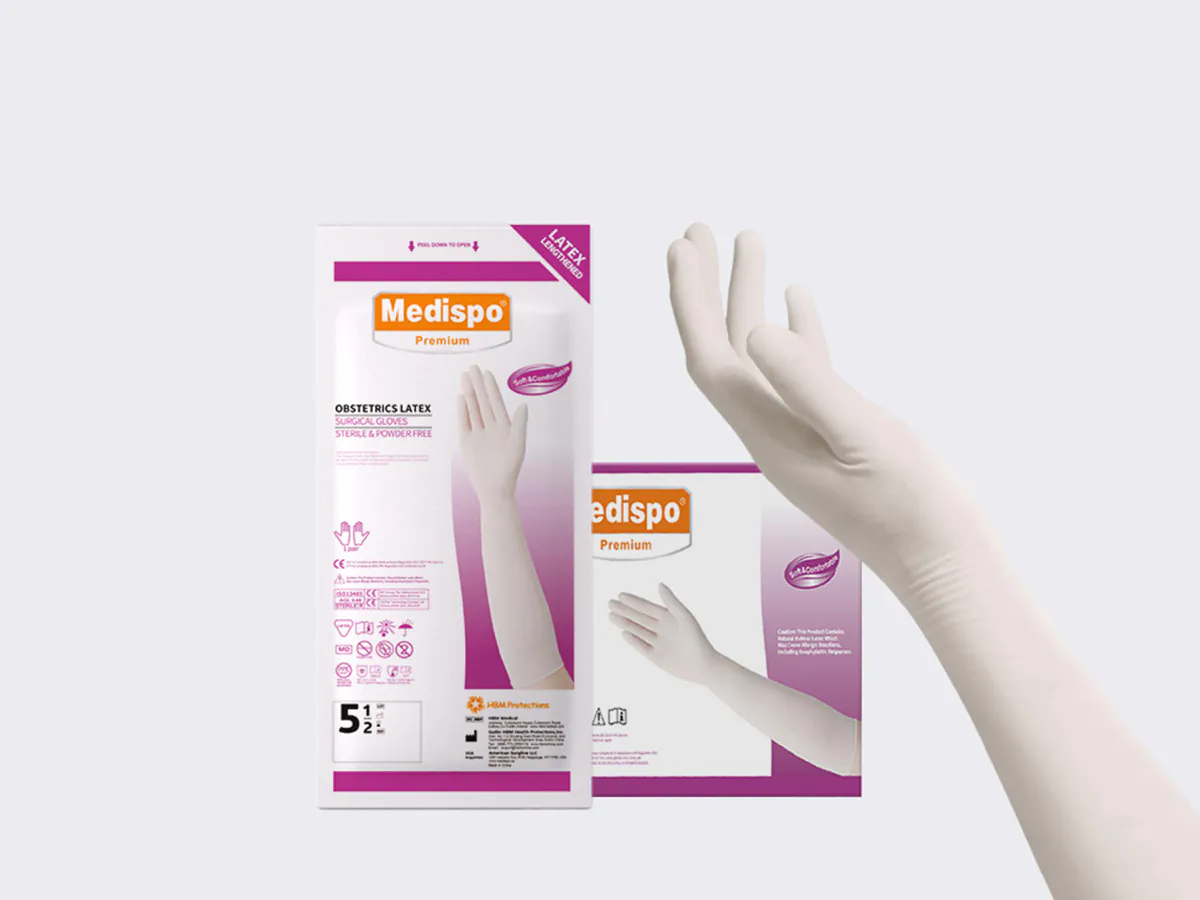
HBM Protections is a manufacturer based in Guilin, China, and became part of Zhonghong Medical in 2023. It manufactures Medispo surgical gloves in natural rubber latex, polyisoprene and neoprene.
The Medispo polyisoprene surgical glove range includes standard PI, Sensitive, Orthopaedic and products for double-gloving configurations, allowing buyers to evaluate different design priorities.
Manufacturing and quality control underpin product delivery. Each glove is 100% air inflated and undergoes 7-stage quality inspections before delivery. Buyers can request specifications and relevant quality documentation for their selected models and destination markets.
To compare Medispo PI surgical gloves, contact us with your target market, required sizes, single- or double-gloving requirements and the handling characteristics you want to evaluate. The team can provide product information and discuss sample evaluation, purchasing requirements and OEM/ODM options.