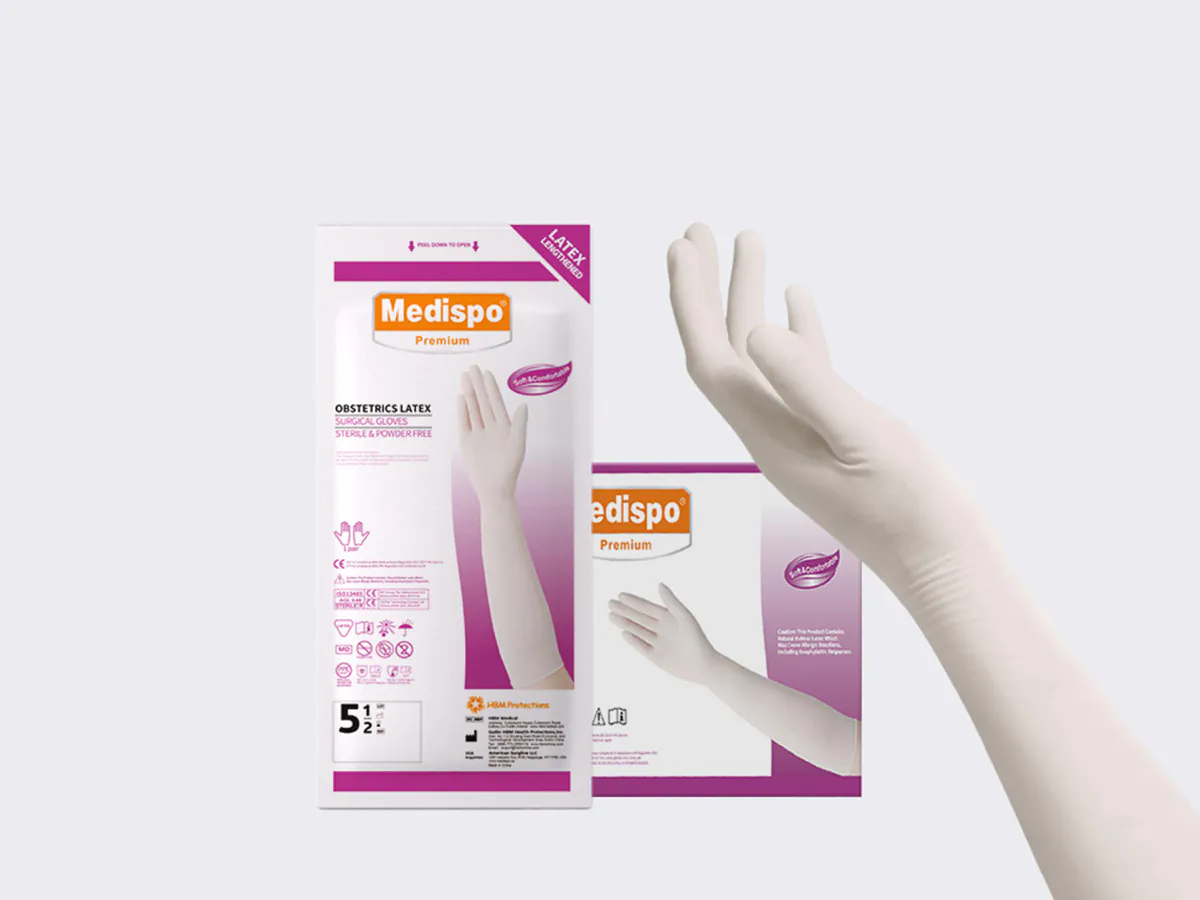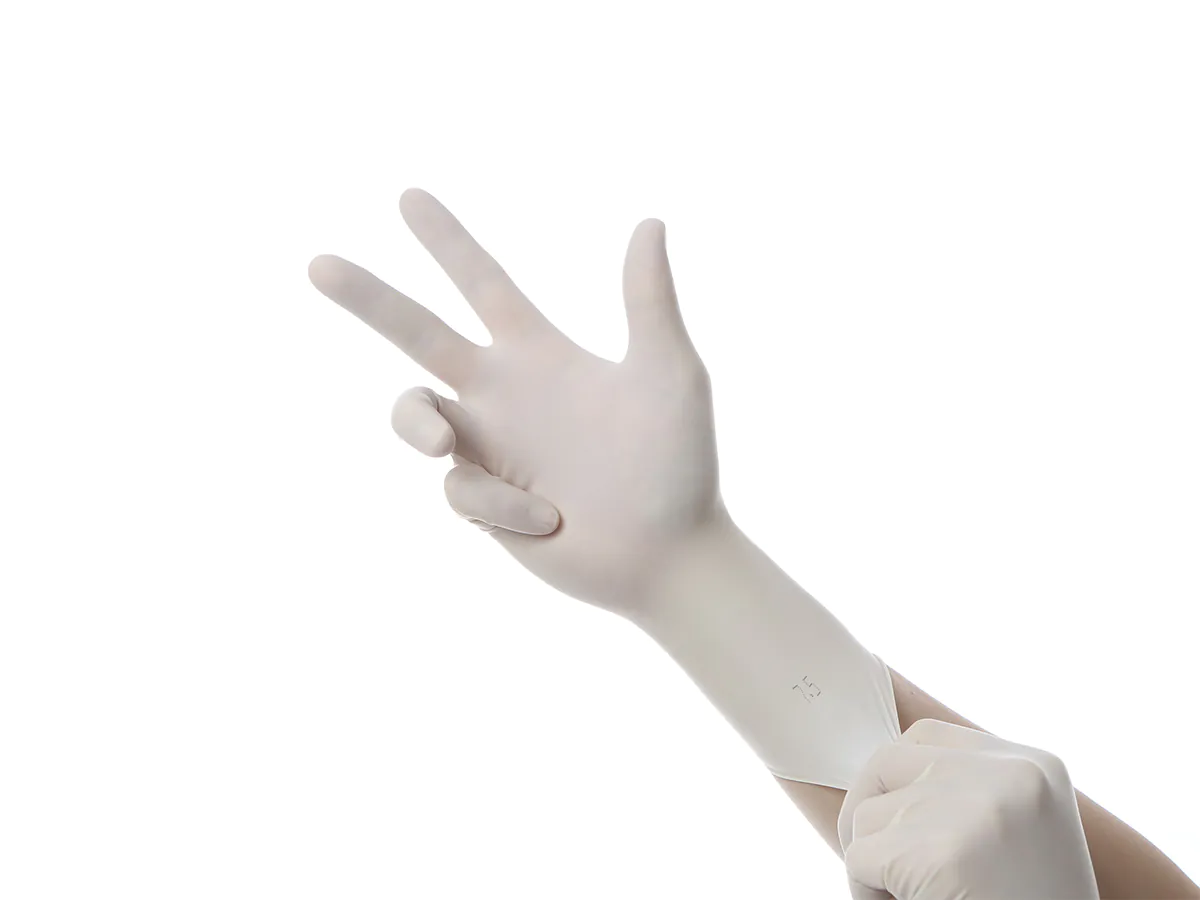
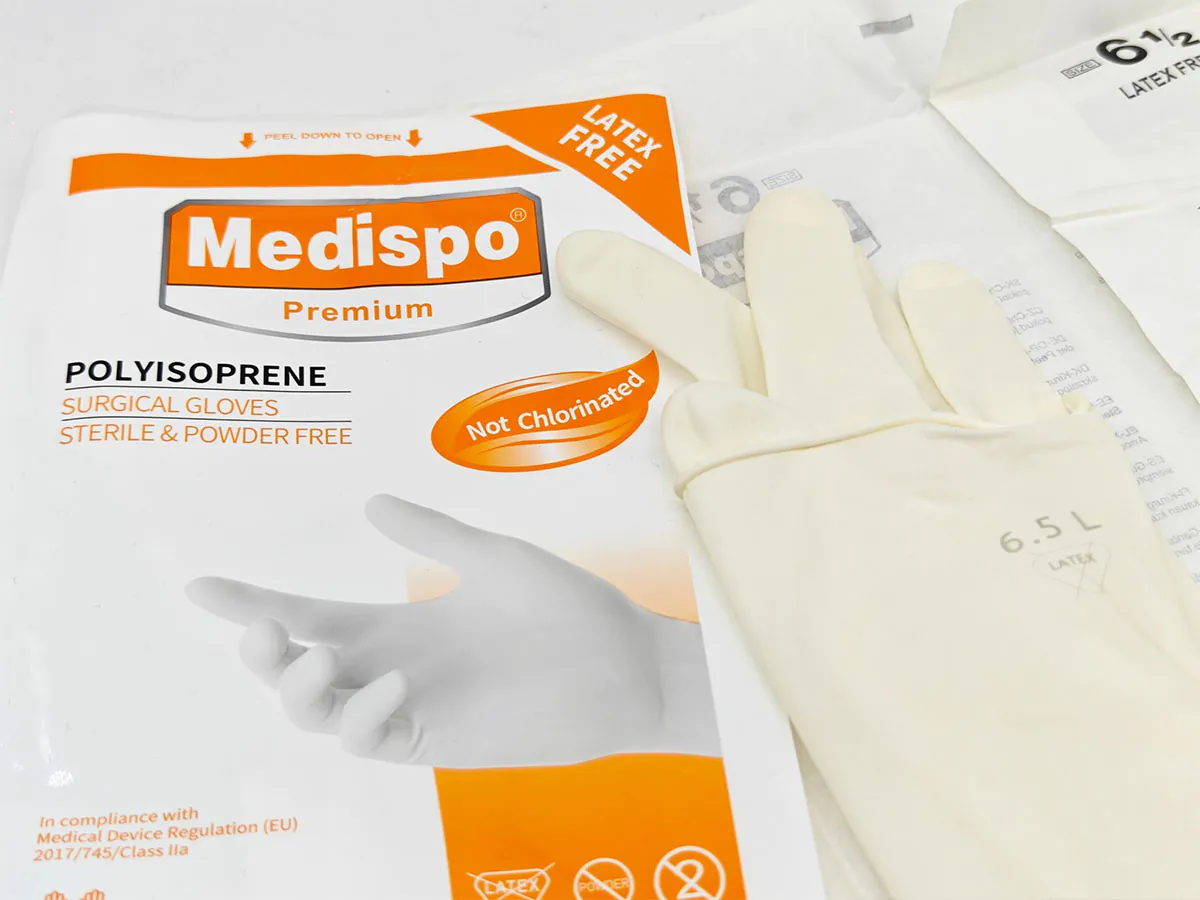
Polyisoprene (PI) surgical gloves offer a latex-free option with a soft feel and latex-like elasticity for surgical teams that value fingertip sensitivity, close fit, and freedom of movement. For hospitals and distributors, selecting the right glove means matching its thickness, fit, and grip to the intended procedure.
What Material Benefits Do PI Surgical Gloves Offer?
Polyisoprene is a synthetic rubber used to manufacture latex-free surgical gloves with stretch characteristics similar to natural rubber latex.
During surgery, gloves need to move with the fingers through repeated bending, stretching, and instrument handling. Material softness, elasticity, and glove shape all contribute to fingertip fit, palm tension, and ease of movement.
PI surgical gloves offer three practical reasons for evaluation:
- A latex-free option: For procurement programs that require latex-free surgical gloves.
- Softness and elasticity: An alternative for teams accustomed to the feel and stretch of natural rubber latex.
- Different product designs: Options for standard procedures, delicate work, orthopaedics, and double gloving.
PI gloves can differ in formulation, thickness, and shape. Compare the selected models rather than assuming that every PI glove provides the same wearing experience.
Why Does Fingertip Sensitivity Matter in Precision Procedures?
Precision work requires users to feel changes in instrument contact, grip pressure, and small hand movements through their gloves.
During fine suturing and small-instrument handling, excess material at the fingertips, a tight palm, or an unstable grip can affect the wearing experience.
Buyers can focus sample evaluations on three areas:
| Evaluation area | Why it matters | What to assess |
|---|---|---|
| Fingertip fit | Influences control of small instruments | Excess fingertip material and the need to reposition the glove |
| Finger movement | Influences ease of repeated hand movements | Tightness when bending fingers, gripping, and releasing instruments |
| Surface grip | Influences instrument handling | Control when rotating, holding, and releasing familiar instruments |
A glove that feels soft when first donned should also perform comfortably during the movements required by the clinical team. Evaluate fingertip fit and instrument handling together.
Are Thinner PI Surgical Gloves Always the Better Choice?
Choose a balance of sensitivity, grip, and procedural requirements. Thickness is one part of that decision.
A thinner design is worth evaluating when tactile feedback is a priority. However, glove shape, sizing, and surface finish also influence the experience. A thinner glove with an unsuitable fit may still leave excess fingertip material or create palm tension.
Medispo® PI Sensitive surgical gloves have nominal fingertip and palm thicknesses of 0.21 mm and 0.19 mm, respectively. They are a sample option for teams prioritizing tactile sensitivity and delicate instrument handling.
During evaluation, use the instruments normally handled by the team. Compare control during gripping, rotation, and suturing before selecting the model and size combination.
How Should Buyers Assess PI Glove Comfort During Extended Procedures?
Assess comfort during repeated movements and sustained wear, rather than relying only on how the glove feels immediately after donning.
An overly tight glove may create noticeable tension when making a fist or bending the fingers. A loose glove may leave excess material at the fingertips or across the palm.
A useful sample evaluation includes:
- Repeatedly gripping and releasing familiar instruments.
- Bending and extending the fingers.
- Checking for palm bunching and fingertip movement.
- Recording tightness and how often the wearer adjusts the glove.
- Testing the intended inner and outer glove combination if double gloving is required.
Specific observations make comparisons more useful. For example, record whether one model leaves less fingertip space or requires fewer adjustments during instrument handling.
Which Medispo® PI Surgical Glove Options Should Buyers Consider?
The Medispo® PI range includes standard, Sensitive, Orthopaedic, blue underglove, and double-gloving set options for different purchasing and procedural needs.
| Product option | Needs to evaluate | Main selection priorities |
|---|---|---|
| Standard PI | Routine surgical use and general latex-free requirements | Overall fit, grip, and wearing comfort |
| PI Sensitive | Fine suturing and small-instrument work where tactile feedback matters | Fingertip sensitivity and control of delicate movements |
| PI Orthopaedic | Orthopaedic procedures involving bone fragments and frequent instrument handling | Thicker construction, grip, and freedom of movement |
| Blue PI underglove | Teams adding an inner glove to an existing outer glove selection | Compatibility, sizing, and color contrast |
| PI double-gloving set | Teams seeking a coordinated inner and outer glove combination | Fit, handling with two layers, and contrasting colors |
Medispo® PI Orthopaedic gloves have nominal fingertip and palm thicknesses of 0.26 mm and 0.24 mm, respectively. They provide a thicker option than PI Sensitive for buyers evaluating orthopaedic applications.
Neither design is automatically the better choice for every procedure. Match the model to the intended work and assess grip, movement, and wearing comfort.
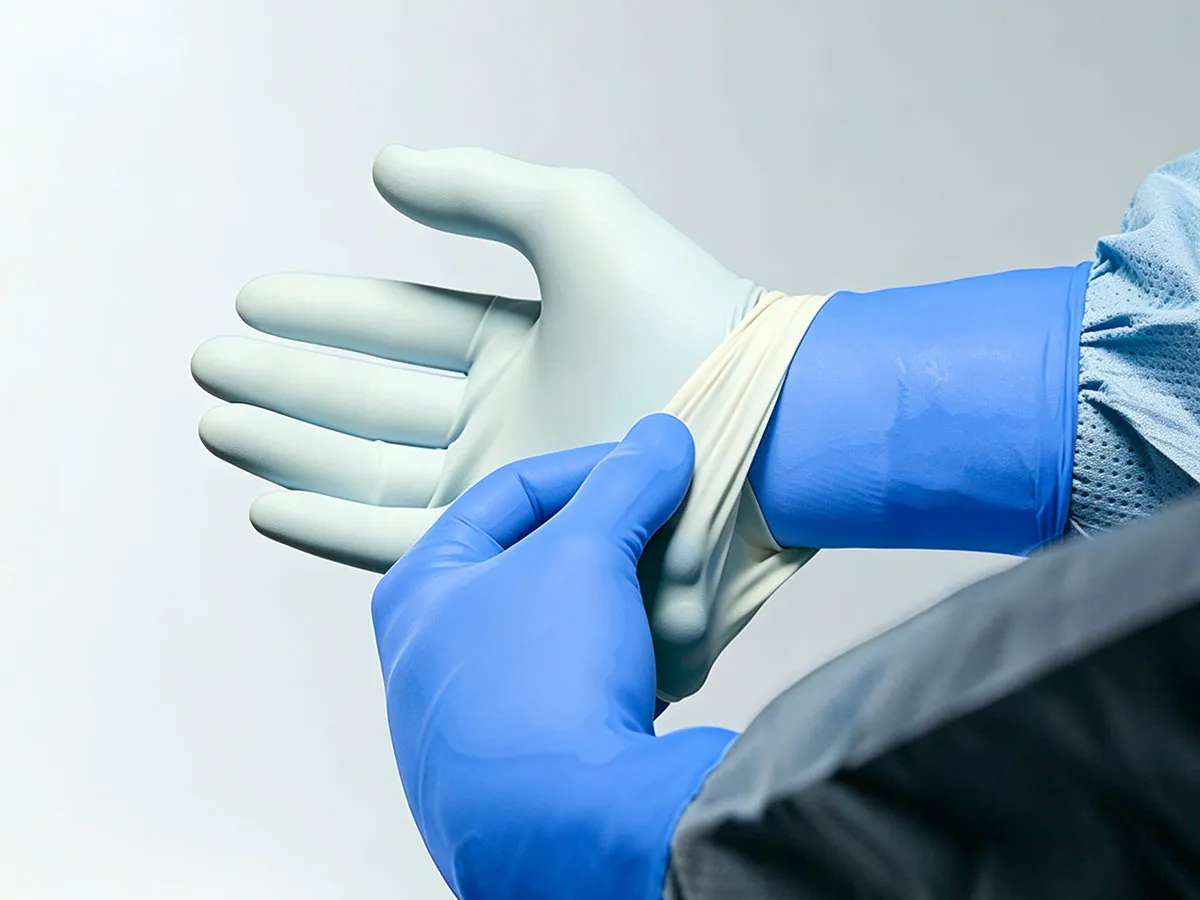
For double gloving, a blue inner glove contrasts with a light-colored outer glove. If liquid enters between the layers through an outer-glove breach, a localized color change may help the wearer notice the damage. Buyers should also evaluate the combined fit and handling of both layers.
The Medispo® PI surgical glove selection guide explains the five options in more detail.
What Quality Documents Should Buyers Check Alongside Glove Fit?
Wear trials help buyers choose a model, while product specifications and supporting documents help confirm its suitability for the purchasing requirements.
Check the selected model’s material, sizes, thickness, sterile status, sterilization method, shelf life, and packaging configuration. Then confirm the standards and regulatory documents required for the destination market.
HBM Protections uses 100% Air Inflation Testing for its surgical gloves. Each glove is 100% air inflated and undergoes 7-stage quality inspections before delivery.
Individual testing and sampling-based lot acceptance serve different quality-control purposes. Buyers can request the relevant documentation to review the test items, methods, and acceptance criteria.
For purchasing requirements involving EN455, ASTM D3577, MDR, or FDA 510(k), ask the team for documents corresponding to the selected model and destination market. Company certification information is available on the HBM Protections quality and certifications page.
What PI Surgical Gloves and Supply Services Does HBM Protections Provide?
HBM Protections is a medical protective products manufacturer based in Guilin, China. It manufactures Medispo® surgical gloves and provides branded supply and OEM/ODM services for distributors, medical suppliers, and brand owners.
The Medispo® surgical glove portfolio includes natural rubber latex, polyisoprene, and neoprene options. Its polyisoprene surgical glove range includes standard, Sensitive, Orthopaedic, and double-gloving choices.
HBM Protections operates 20 surgical glove production lines with annual capacity exceeding 500 million pairs across its surgical glove range. The team can provide product specifications, packaging options, and available test and regulatory documentation for the selected products.
If you are sourcing PI surgical gloves for delicate procedures, orthopaedics, or double gloving, contact HBM Protections with your destination market, intended application, and branding requirements to discuss suitable models, samples, and supply options.