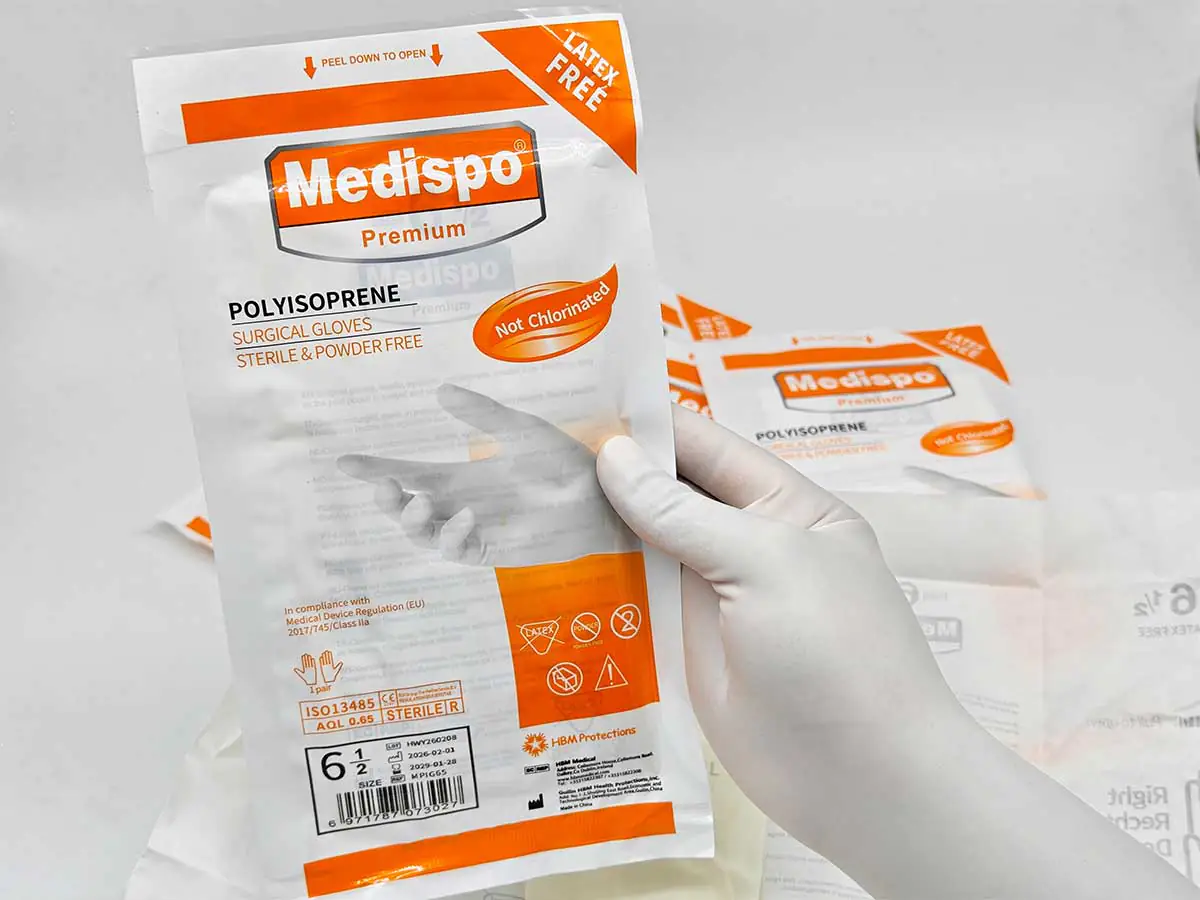
When choosing surgical gloves, first check whether the intended setting requires avoiding natural rubber latex. If a healthcare worker or patient has a known natural rubber latex allergy, or the facility has a latex avoidance policy for the procedure, synthetic polyisoprene (PI) is one option to consider. Confirm the material statement for the exact glove model before requesting samples.
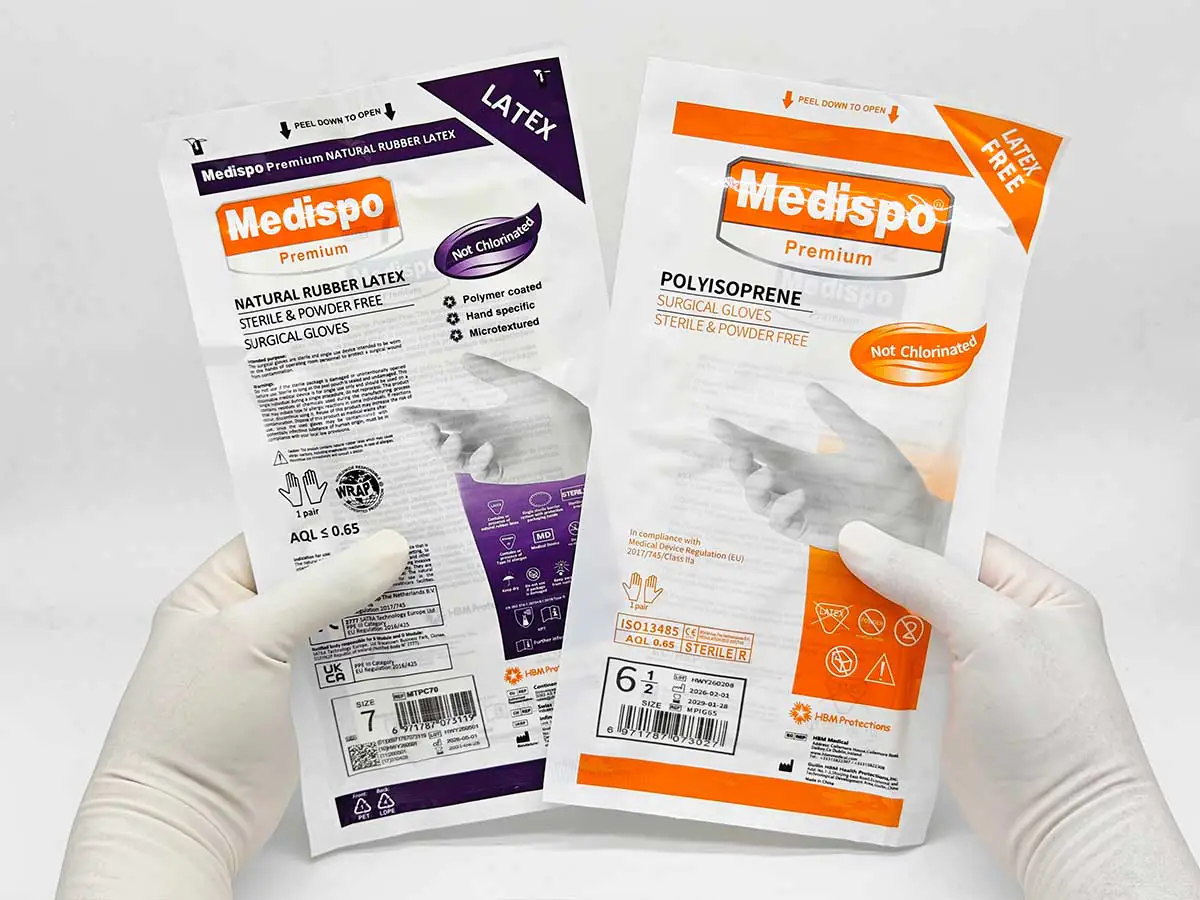
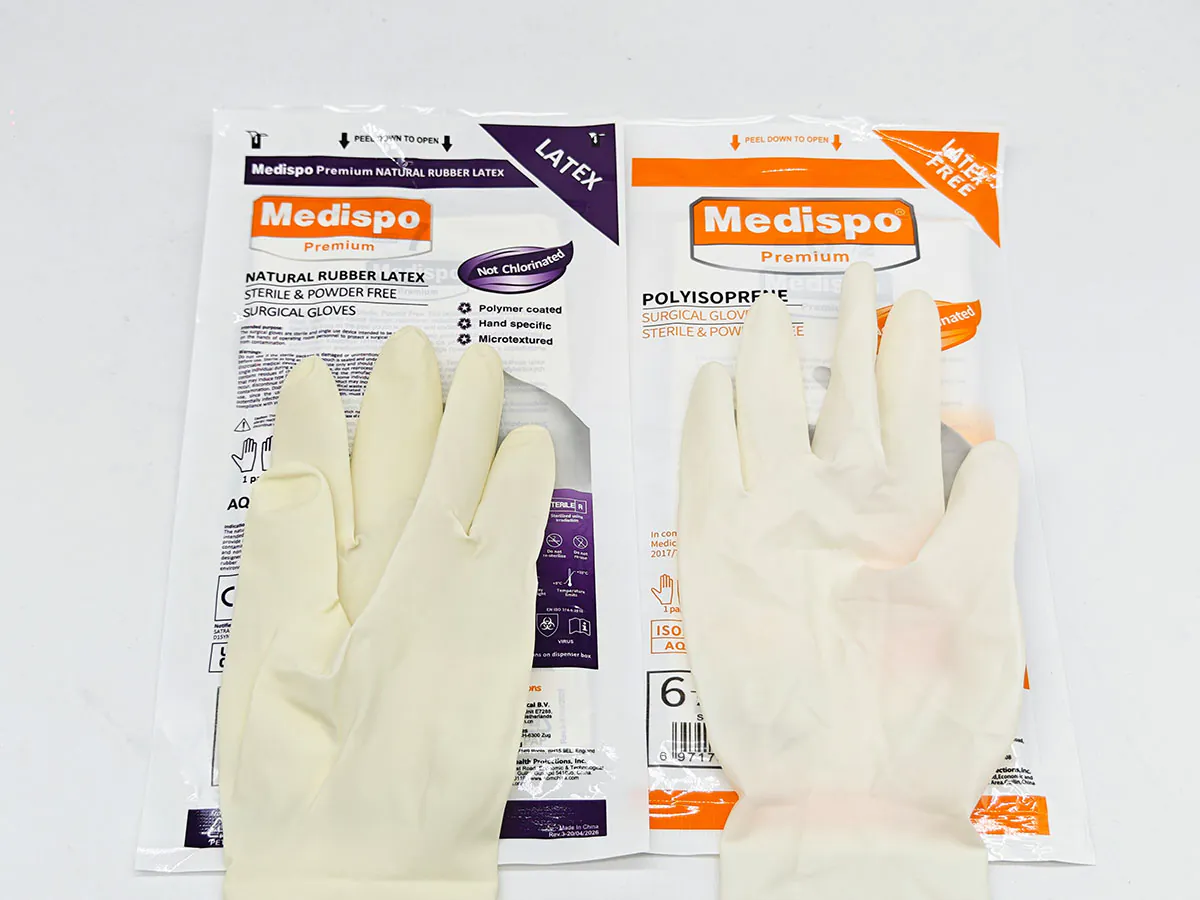
If both materials meet the facility’s requirements, think about what the team wants to improve. A closer fingertip fit may matter most during delicate handling, while easier donning may be a priority for staff who change gloves frequently. Medispo® Polyisoprene Surgical Gloves offer a soft, close-fitting synthetic option. Medispo® TPC Latex Surgical Gloves combine the elasticity of natural rubber latex with a T-Polyure inner coating designed to help the hand slide in smoothly.
Medispo Polyisoprene vs TPC Latex Surgical Gloves
| Selection factor | Medispo Polyisoprene Surgical Gloves | Medispo TPC Latex Surgical Gloves |
|---|---|---|
| Base material | Synthetic polyisoprene | Natural rubber latex |
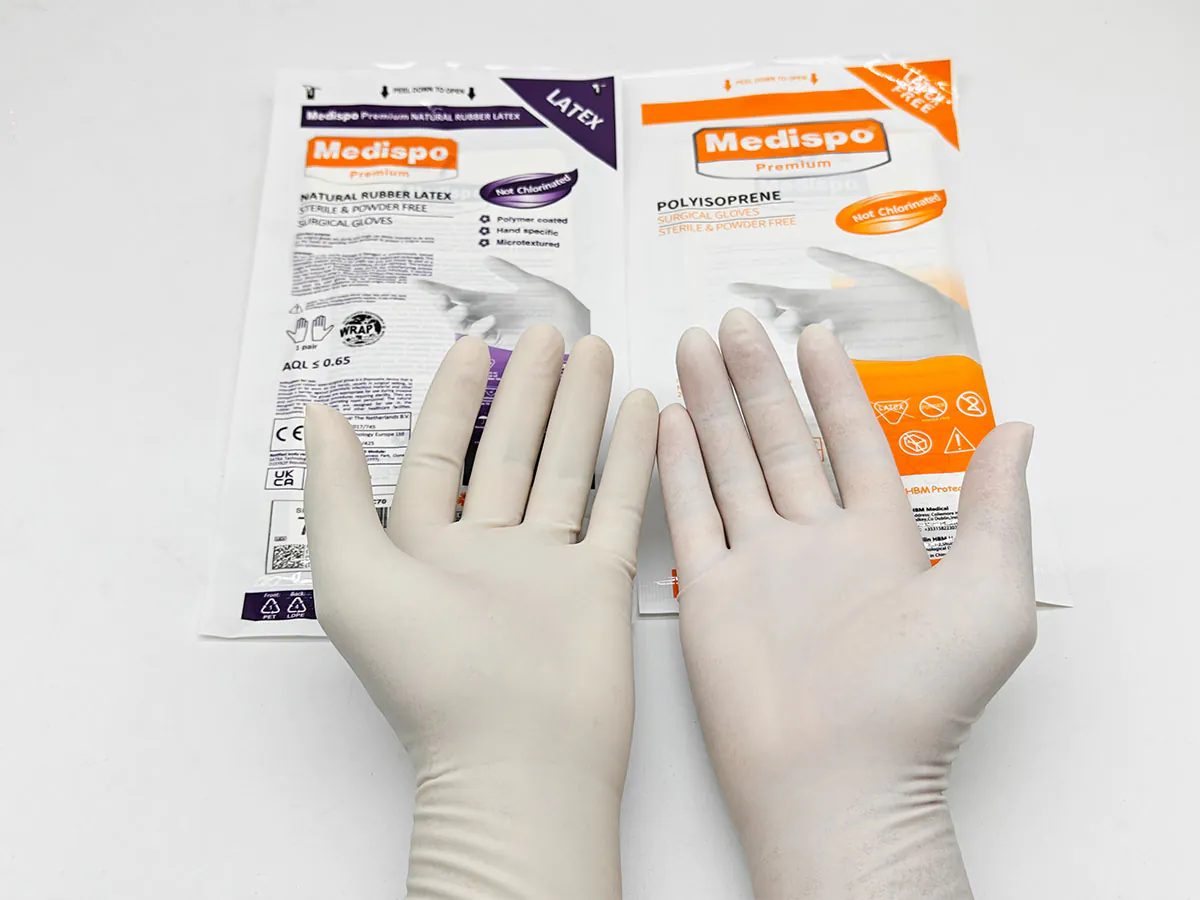
| Fit and donning | A soft feel and close fit. During a trial, pay particular attention to how the fingertips fit and how freely the fingers move. | A powder-free glove with the elasticity of natural rubber latex. The T-Polyure coating on the inside helps the fingers and palm slide into the glove. |
| When to shortlist it | When the purchasing specification calls for a glove made without natural rubber latex and the team also values a soft, close fit. | When the facility permits natural rubber latex and the team wants to evaluate ease of donning during frequent glove changes. |
What Does the T-Polyure Coating Do?
T-Polyure is a polymer coating applied to the inside of the glove during manufacturing. Its purpose is to help the fingers and palm slide into the glove more smoothly. The TPC model uses this inner coating to aid donning without relying on chlorination of the latex film for that purpose.
For teams that change gloves frequently, compare the TPC model with the glove already in use. With dry hands, check how easily the fingers reach the ends of the glove and how smoothly the palm slides in. If the product instructions and facility procedures allow it, include a separate sample trial with slightly damp hands.
How to Compare Samples When Both Materials Meet the Specification
Start with the labelled size each wearer normally uses. If the team is replacing an existing glove, include that model in the same trial. Have each wearer repeat the same tasks with each sample and record the model and size alongside their feedback.
- Check fingertip and palm fit. Open the hand and make a loose fist. Look for excess material at the fingertips, tightness across the palm or movement at the cuff.
- Repeat the same handling task. Pick up and reposition the same instrument or test object with each sample. Note any differences in fingertip feel and grip.
- Compare donning and removal. Pay attention to how easily the fingers settle into place, how smoothly the palm slides in and whether the cuff stays in position as the hand moves.
- Try an adjacent size if needed. If a glove feels loose or tight, repeat the task in another size to see how much of the difference comes from fit.
Record what the wearer actually noticed. “Both samples were size 7. Model A had extra room at the index fingertip, while Model B felt tight across the palm” gives the purchasing team more to work with than “Model A felt better.”
What to Verify Before Placing an Order
Match the sample label, quotation and product documentation to the same model code. Confirm the material, size range, sterility labelling and packaging configuration. If the tender specifies thickness, an AQL for freedom from holes or mechanical performance requirements, send the exact wording to the supplier and request documentation for the proposed model.
When comparing thickness figures, check that they refer to the same measurement location and that the values are reported on the same basis. When reviewing test data, distinguish a specification limit from a result measured on a particular batch.
If you’re comparing Medispo polyisoprene and TPC latex surgical gloves, start with the sizes your team actually wears. Contact HBM Protections with your target market, preferred sizes and any material requirements. The team can confirm which samples are available for a side-by-side trial and which documents cover each model.