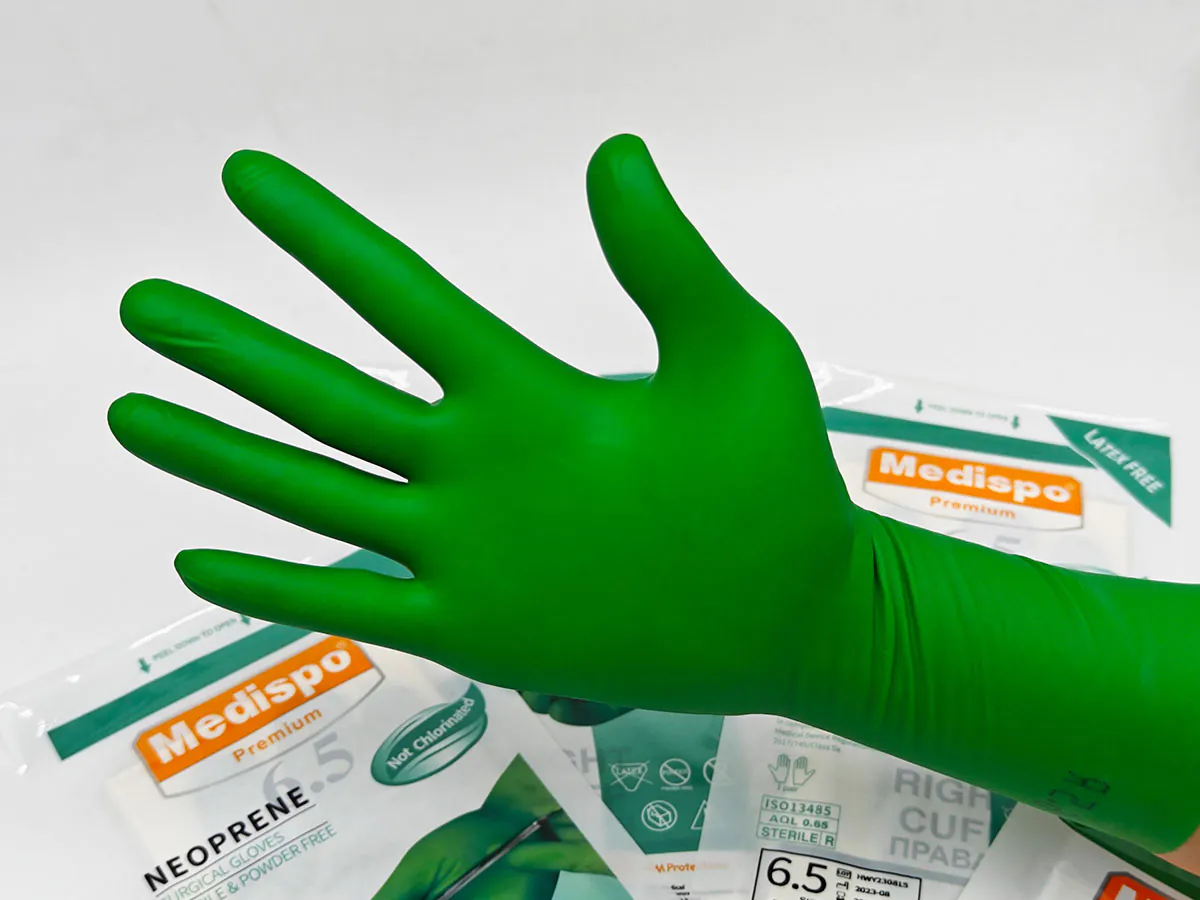
Neoprene surgical gloves are one of the material options buyers encounter when sourcing latex-free surgical gloves. However, the material name alone does not explain a product’s fit, formulation, surface design or suitability for a particular purchasing requirement.
For distributors, healthcare suppliers and private-label brands, a useful evaluation connects the material with the specifications and documentation of the selected model.
This guide explains what neoprene surgical gloves are, how they differ from natural rubber latex and polyisoprene products, and what buyers should review before discussing supply.
What Are Neoprene Surgical Gloves?
Neoprene surgical gloves are made from polychloroprene, a synthetic rubber. Product literature may use the terms “neoprene” and “polychloroprene” when describing this material.
Unlike natural rubber latex, polychloroprene is a synthetic polymer. Neoprene surgical gloves provide a material option for purchasing requirements involving avoidance of natural rubber latex.
The product category still matters. Neoprene is also used in examination, industrial and other protective gloves. A reusable chemical-resistant glove and a sterile surgical glove should not be treated as interchangeable simply because both use neoprene.
Buyers should therefore identify the intended use, sterile status and product instructions before comparing specifications.
Neoprene vs Polyisoprene: Comparing Medispo Surgical Gloves
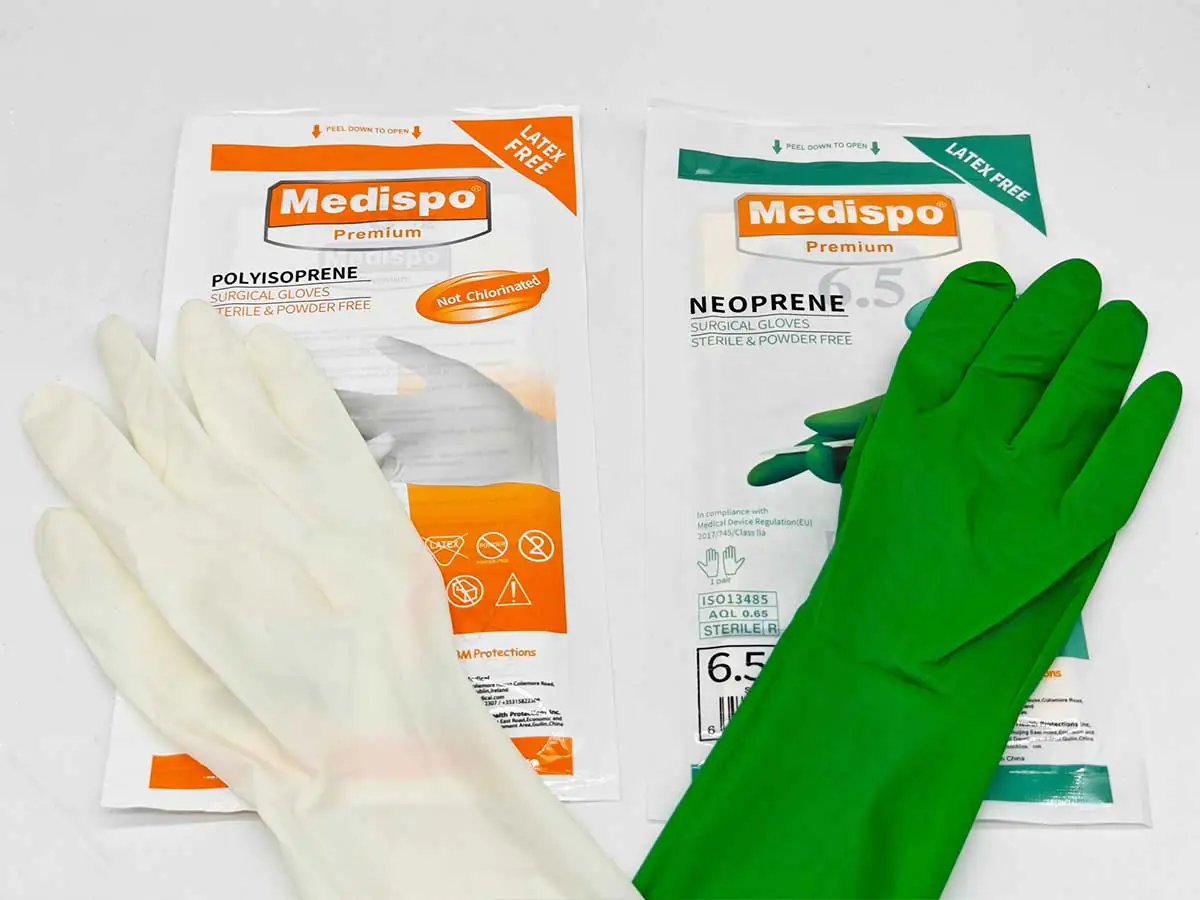
Neoprene and synthetic polyisoprene both provide alternatives to natural rubber latex. Within the Medispo range, buyers can compare these options by material characteristics, feel, price and available product designs.
Medispo polyisoprene gloves offer a softer feel, while the neoprene option is slightly lower in price under comparable purchasing conditions.
| Comparison | Medispo Neoprene Surgical Gloves | Medispo Polyisoprene Surgical Gloves |
|---|---|---|
| Material Characteristics | Synthetic polychloroprene rubber; an alternative to natural rubber latex | Synthetic polyisoprene rubber; an alternative to natural rubber latex |
| Typical Feel | Flexible, with a slightly firmer feel than Medispo PI gloves | A softer, elastic, latex-like feel |
| Price Positioning | Generally slightly lower in price than the standard PI option | Generally slightly higher in price than the neoprene option |
| Product Selection | One neoprene model within the latex-free range | Multiple designs, including standard, sensitive, orthopaedic and underglove options |
| Purchasing Considerations | A latex-free option for buyers balancing product requirements and cost | An option for buyers prioritizing a softer feel or a wider choice of designs |
This comparison describes the Medispo range. Actual pricing depends on the selected model, packaging, order quantity and supply terms. Fit and handling also depend on thickness, sizing and surface treatment and should be assessed using samples.
For buyers comparing latex-free surgical gloves, neoprene offers a slightly lower-priced option, while polyisoprene provides a softer feel and a broader product selection. The final choice should also consider dimensions, intended use and supporting documentation.
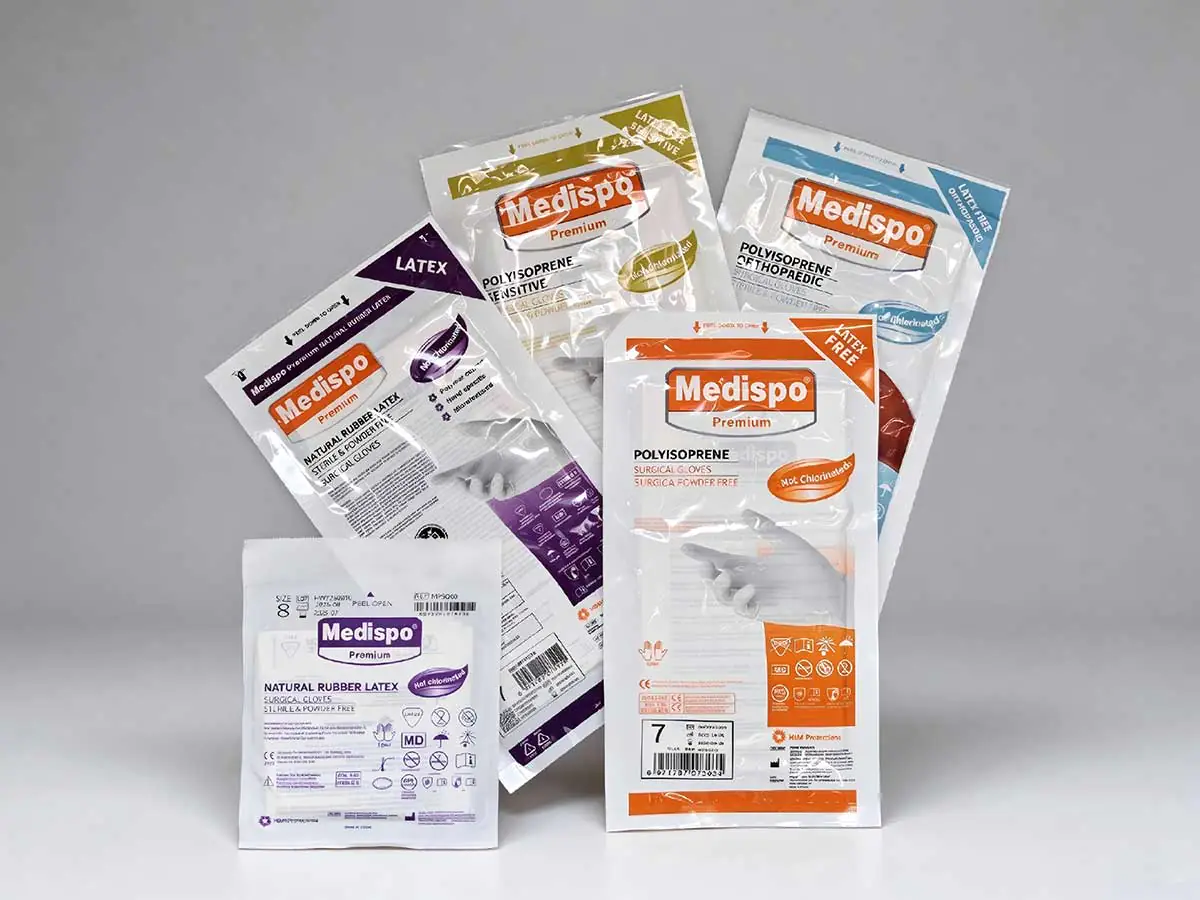
Explore the Medispo neoprene surgical gloves and polyisoprene surgical glove range to compare available options. For natural rubber latex products, see the Medispo latex surgical glove range.
What Features Should Buyers Evaluate?
Fit and Dexterity
A useful fit assessment considers finger length, palm fit, thumb movement and cuff position. The selected size should allow comfortable movement without excessive tightness or loose material interfering with handling.
Thickness should also be reviewed by measurement location. Fingertip, palm and cuff values describe different parts of the glove, so comparing one product’s fingertip thickness with another product’s palm thickness can be misleading.
Samples can support an evaluation of fit and handling alongside the technical specification.
Surface Finish and Donning
Surface texture and internal treatment are separate features.
The external finish affects contact with instruments and other surfaces. The internal treatment relates to how the glove is put on. Buyers should request the product description and assess samples under the conditions relevant to their intended use.
If double gloving is required, confirm the proposed inner and outer glove combination, sizing and manufacturer guidance. Glove color alone does not establish that a product is an indicator underglove.
Dimensions and Packaging
Review the available sizes, glove length and cuff design together with the packaging configuration.
For sterile supply, buyers should also check individual pouch labeling, batch identification, expiry information and storage instructions. Packaging requirements can differ between branded distribution and private-label projects.
The approved specification and packaging artwork should correspond to the product being supplied.
Latex-Free and Accelerator-Free: What Buyers Should Check
Latex-free and accelerator-free describe different aspects of a glove. A glove made without natural rubber latex may still use chemical accelerators during manufacturing. DPG-free refers specifically to DPG and does not mean that all accelerators are absent.
Buyers with specific formulation requirements should review the selected model’s composition and supporting documentation. For Medispo neoprene gloves, contact HBM Protections to confirm the formulation details relevant to your purchasing requirements.
What Documents Should Buyers Request?
A purchasing review should connect each document with the selected material, model and destination market.
| Document or Information | What Buyers Should Confirm |
|---|---|
| Technical specification | Material, model, sizes, dimensions, surface design and packaging |
| Labeling and instructions | Intended use, sterile status, precautions, storage and expiry information |
| Relevant test documentation | Sample identity, test methods, standard editions, scope and results |
| Market documentation | Applicability to the selected product and destination |
| Quality and traceability information | Batch identification, release documentation and traceability arrangements |
A material name or a list of standards is not a substitute for product-specific evidence. Buyers should establish whether a report covers the proposed neoprene model rather than another glove material or series.
For more detail on reviewing testing scope, see ASTM D3577 for Surgical Gloves: What Buyers Should Know.
Chemical resistance and chemotherapy drug permeation require particular attention. Neither should be inferred from the word “neoprene”; any such requirement needs evidence corresponding to the selected product, substances and test conditions.
Medispo Neoprene Surgical Gloves
HBM Protections offers Medispo neoprene surgical gloves within its latex-free surgical glove range.
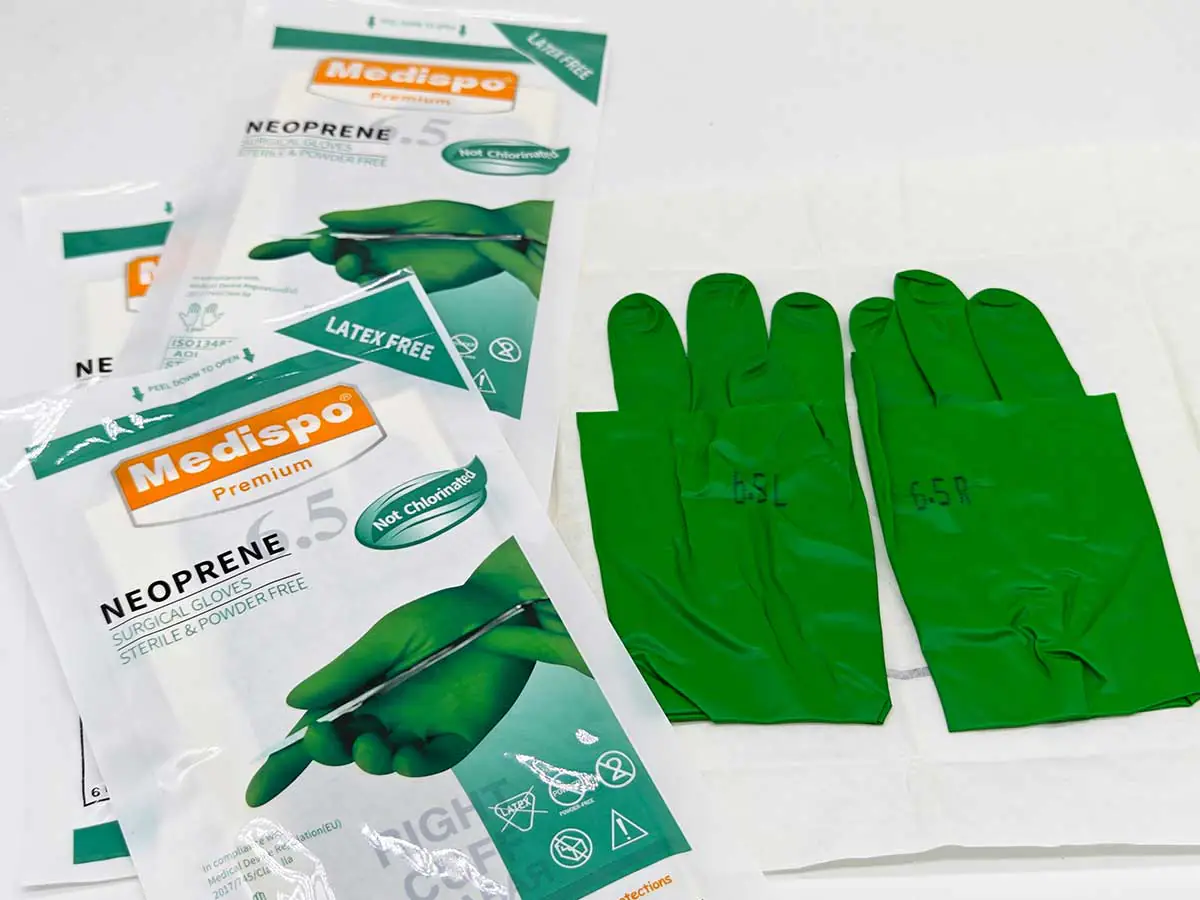
The published product specification describes a green, powder-free, sterile glove with a hand-specific anatomical design, beaded cuff and micro-textured surface. The following details provide a starting point for product discussions.
| Product Feature | Published Specification |
|---|---|
| Material | Neoprene |
| Color | Green |
| Design | Hand-specific, anatomical design |
| Surface | Micro-textured |
| Cuff | Beaded |
| Powder status | Powder-free |
| Sterilization | E-beam |
| Sizes | 5.5–9.0 |
| Length | 290 mm for sizes 5.5–8.5; 300 mm for size 9.0; stated tolerance ±5 mm |
| Thickness | Fingertip 0.21 mm; palm 0.18 mm; cuff 0.15 mm; stated tolerance ±0.03 mm |
| Packaging | One pair per pouch; 50 pairs per box; 200 pairs per shipping carton |
Buyers should confirm the current specification and packaging version for the proposed order.
HBM Protections applies the following inspection approach to its surgical gloves:
Each glove is 100% air inflated and undergoes 7-stage quality inspections before delivery.
The quality certifications page provides an overview of company and product-related credentials. Applicable supporting documents should be confirmed for the selected model and market.

Discuss Your Neoprene Surgical Glove Requirements
A clear sourcing brief helps narrow the product and documentation review. Useful information includes the target market, intended use, size mix, estimated quantities and packaging requirements.
HBM Protections supports Medispo branded supply and OEM/private-label surgical glove projects. Packaging, instructions and brand printing requirements can be discussed against the available product configuration.
To request Medispo neoprene product information or discuss a sourcing project, contact HBM Protections with your requirements.