When importing sterile surgical gloves for the first time, one of the most common questions is not about the product itself — it is about the paperwork. Registration with the importing country’s Ministry of Health, tender qualification, or hospital procurement often requires notarized or legalized manufacturer documents.
This guide explains the three levels of document authentication: notarization, embassy legalization, and apostille.
Notarization
Notarization verifies that the signature and company seal on a document are genuine. A notary public — or an authorized body such as the China Council for the Promotion of International Trade (CCPIT) — witnesses the signing and adds their own seal.
For documents issued in China, there are two common paths:
- Notary public office: The signatory appears in person at a local notary office, signs the document in front of the notary, and receives a notarial certificate.
- CCPIT: The China Council for the Promotion of International Trade authenticates commercial documents and seals for international trade use.
Notarization alone is accepted in some countries, but for most Ministry of Health registrations it must go one step further.
Embassy Legalization
Embassy legalization (also called consular legalization) is the process of taking a notarized document to the embassy or consulate of the importing country so that its officials verify the seal of the notary or CCPIT.
The typical sequence is:
- Document is signed and stamped by the manufacturer
- The document is notarized by a notary public or CCPIT
- The notarized document is authenticated by the Chinese Ministry of Foreign Affairs
- The document is finally legalized by the embassy or consulate of the importing country
This process is required by many countries that are not part of the Hague Apostille Convention.
Apostille
The Apostille is a simplified authentication established by the 1961 Hague Convention. Countries that are members of the convention accept an “apostille” certificate in place of embassy legalization.
For an apostille:
- The document is notarized or authenticated by the competent authority
- The designated authority in the issuing country attaches an apostille certificate
- The document is then accepted in any other Hague Convention member country
Apostille is faster and less expensive than full embassy legalization, but only works between countries that both accept the Hague Convention.
Which Process Do You Need?
The required process depends on the importing country:
- Hague Convention member countries: Apostille is usually sufficient
- Non-Hague countries: Notarization followed by embassy legalization is typically required
- Some markets: Accept only manufacturer documents with CCPIT certification
Always confirm requirements directly with the importer’s local Ministry of Health or tender authority, as requirements can change.
How HBM Supports Importers
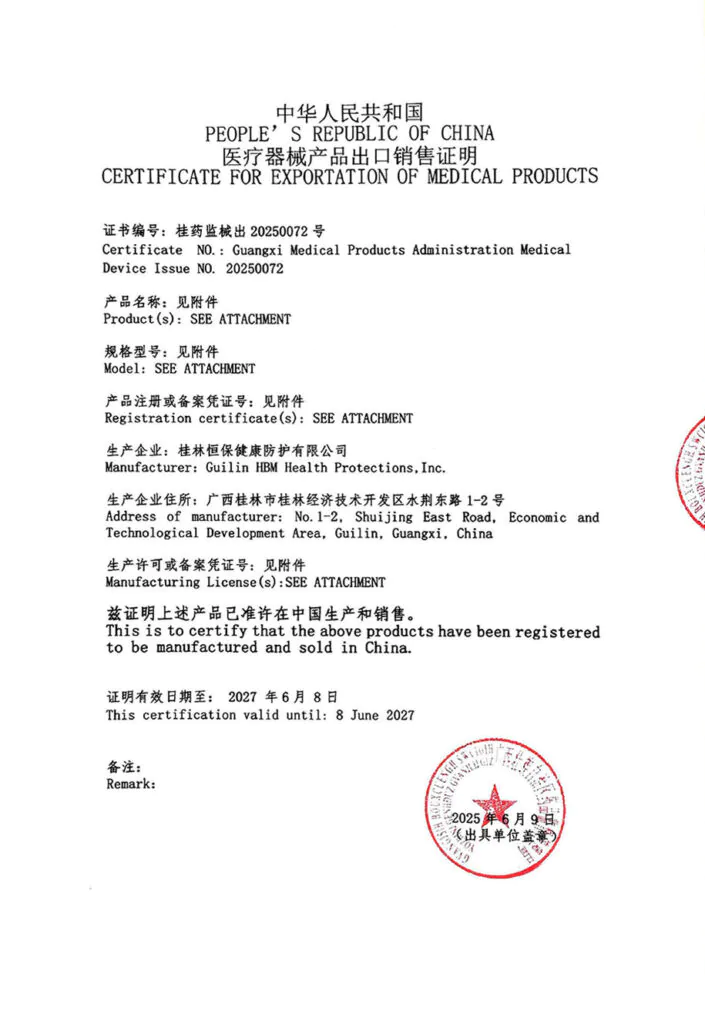
HBM Protections supplies standard quality and regulatory documentation including:
- Certificate for Exportation of Medical Products (Free Sale Certificate)
- ISO 13485 certificate
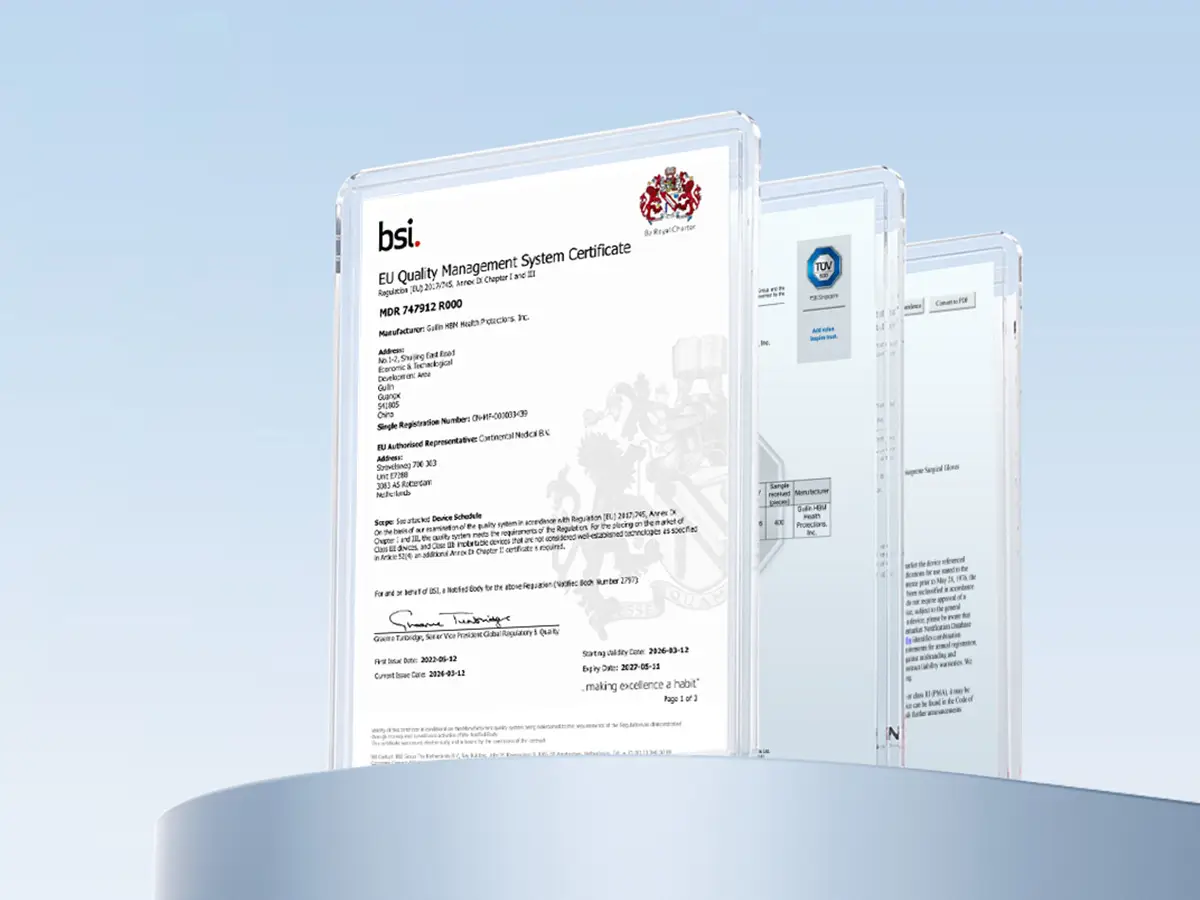
- EU MDR certificate (BSI)
- FDA 510(k) clearance
- EN 455 test reports
For importers requiring notarization, CCPIT certification, embassy legalization or apostille, our team can prepare manufacturer documents and assist through the notarization and authentication process in China.
Contact our team to discuss your import documentation requirements.