Choosing a condom manufacturer is not the same as choosing a general consumer products supplier. Condoms are Class IIb medical devices under EU MDR, and a manufacturing error can mean product recalls, regulatory action, and lasting brand damage.
For brands, distributors and procurement teams evaluating an OEM partner, the decision comes down to four things: compliance, product range, manufacturing capacity, and quality control.
Compliance: The First Filter
A condom manufacturer must hold more than a basic quality system. Key certifications to check:
- EU MDR (Class IIb) — Condoms are classified as Class IIb devices under Regulation (EU) 2017/745. This requires a notified body audit of the full quality management system, not just product testing.
- ISO 13485 — Medical device quality management standard.
- ISO 4074 — The international standard specifically for natural rubber latex condoms, covering dimensions, bursting volume, and transparency.
- ISO 14001 — Environmental management (less critical but shows operational maturity).
HBM Protections’ condom range holds EU MDR certification from BSI (covering natural rubber latex male condoms as Class IIb), ISO 13485, ISO 14001 and ISO 4074 compliance.
Product Range: Can the Factory Produce What You Need?
A factory that only makes one type of condom limits your brand’s product line. Evaluate whether the manufacturer can produce:
Category | Examples |
|---|---|
Natural rubber latex | Smooth, ultra-thin, ribbed, dotted, flavored, long-lasting, colored |
Latex-free (polyurethane) | Ultra-thin for latex-sensitive users |
Female condoms | Barrier method for female-initiated protection |
Specialty products | Vibration condoms, compound barrier condoms |
Manufacturing Capacity
Capacity matters for two reasons: lead time and order flexibility.
HBM Protections operates 4 condom production lines with an annual output of more than 500 million units. The company has been manufacturing condoms since 2001 and holds 40+ patents in condom technology.
For private label brands, this scale means:
- Stable lead times for repeat orders
- Ability to handle both small brand launches and large tenders
- Consistent quality across production runs

Quality Control: What Actually Gets Tested?
Every condom on the market should have passed electrical testing. But buyers should ask what else is tested:
- 100% electronic testing — Every condom passes an electrical conductance test to detect pinholes
- Burst testing — Samples are tested for bursting volume and pressure
- Water leakage testing — Samples are checked for leaks
- Visual and packaging inspection — Final inspection before release
HBM performs 100% electronic testing on every condom, with additional burst, water-leakage and packaging checks on sampled batches.
R&D and Brand Experience
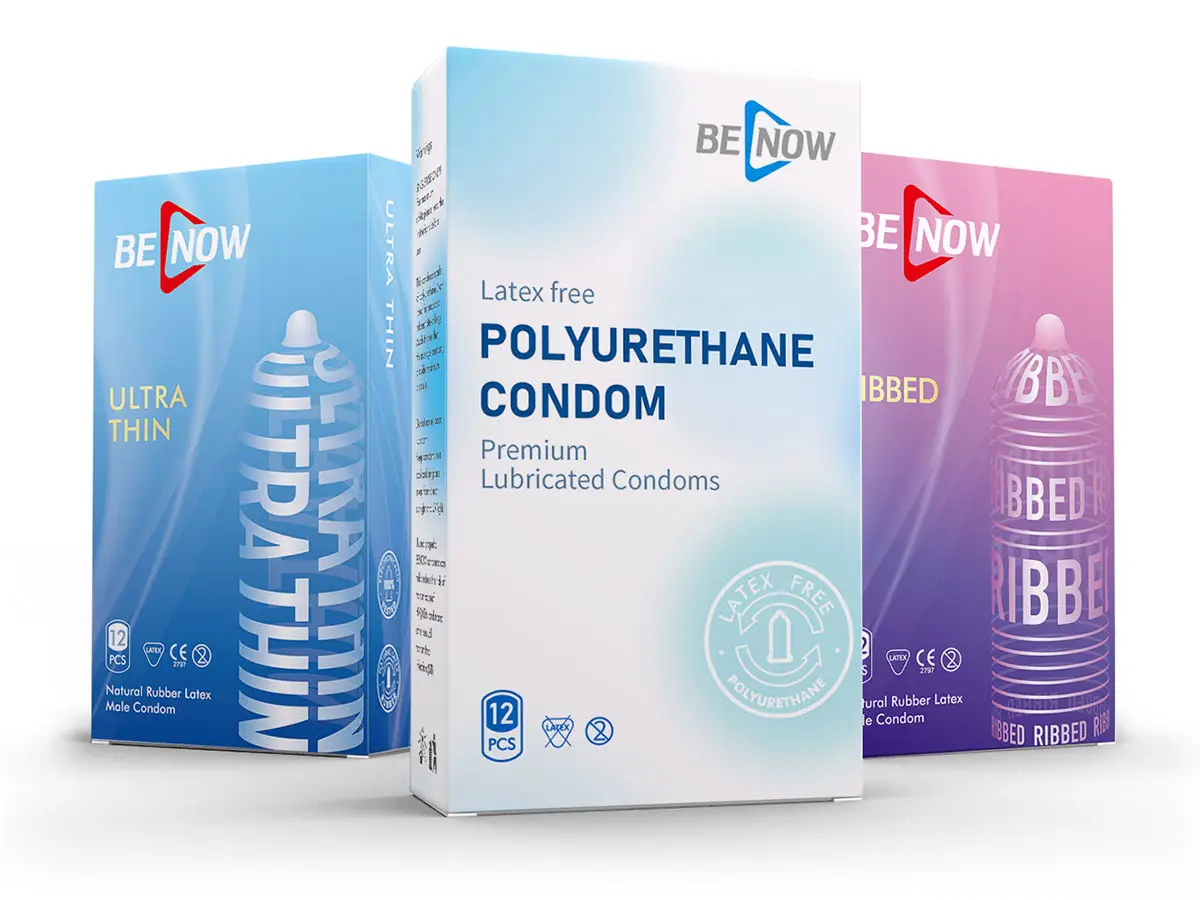
A manufacturer that only produces to your drawing is different from one that has developed its own brand. HBM’s BENOW brand was developed in-house, which means the company has direct experience in product development, packaging design, shelf-life stability and market feedback — experience that transfers to every OEM and private-label project.
Working with HBM Protections
HBM Protections provides OEM, ODM and private-label condom solutions for:
- Global condom brands
- Medical distributors and importers
- Hospitals and healthcare organizations
- Government procurement programs
We support projects from product development through packaging design and mass production.
Contact our team to discuss your condom OEM requirements or request the BENOW condom catalog.