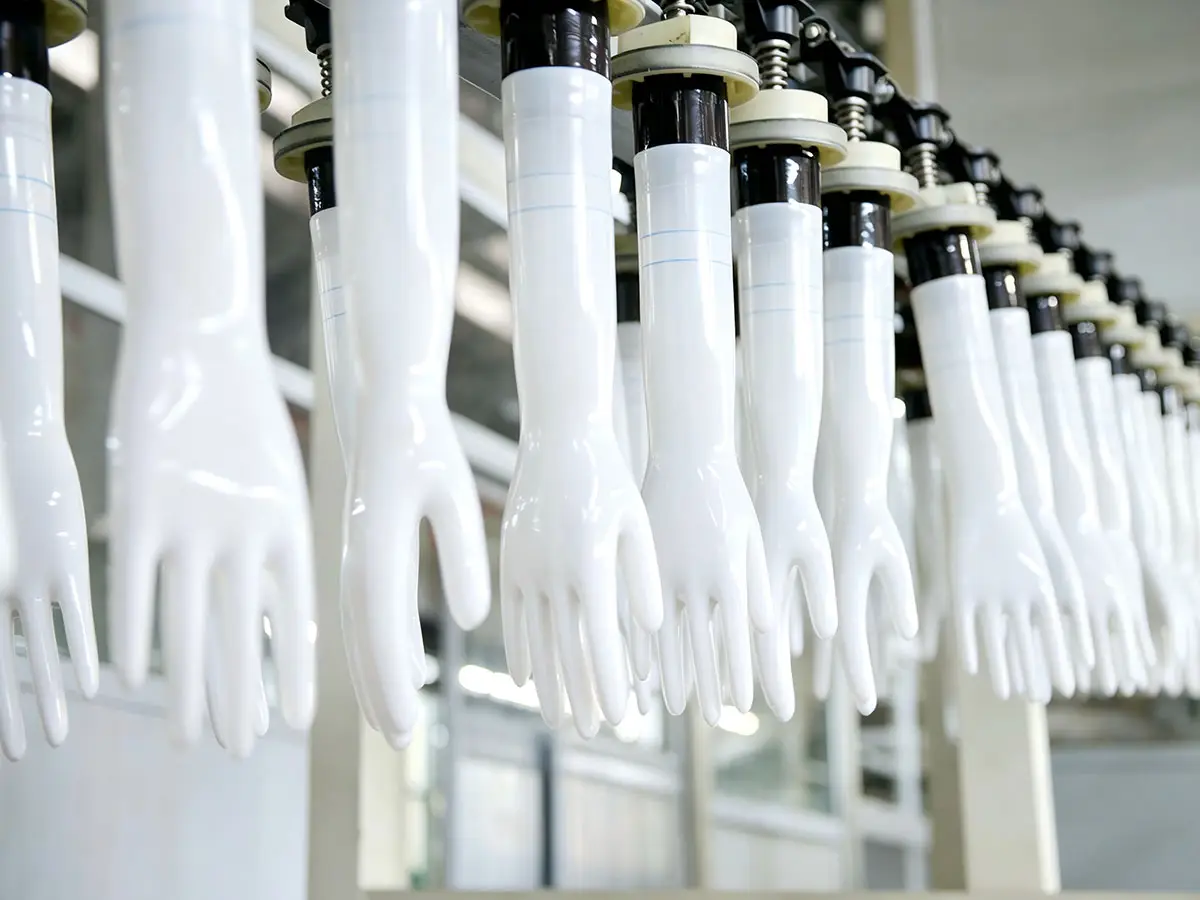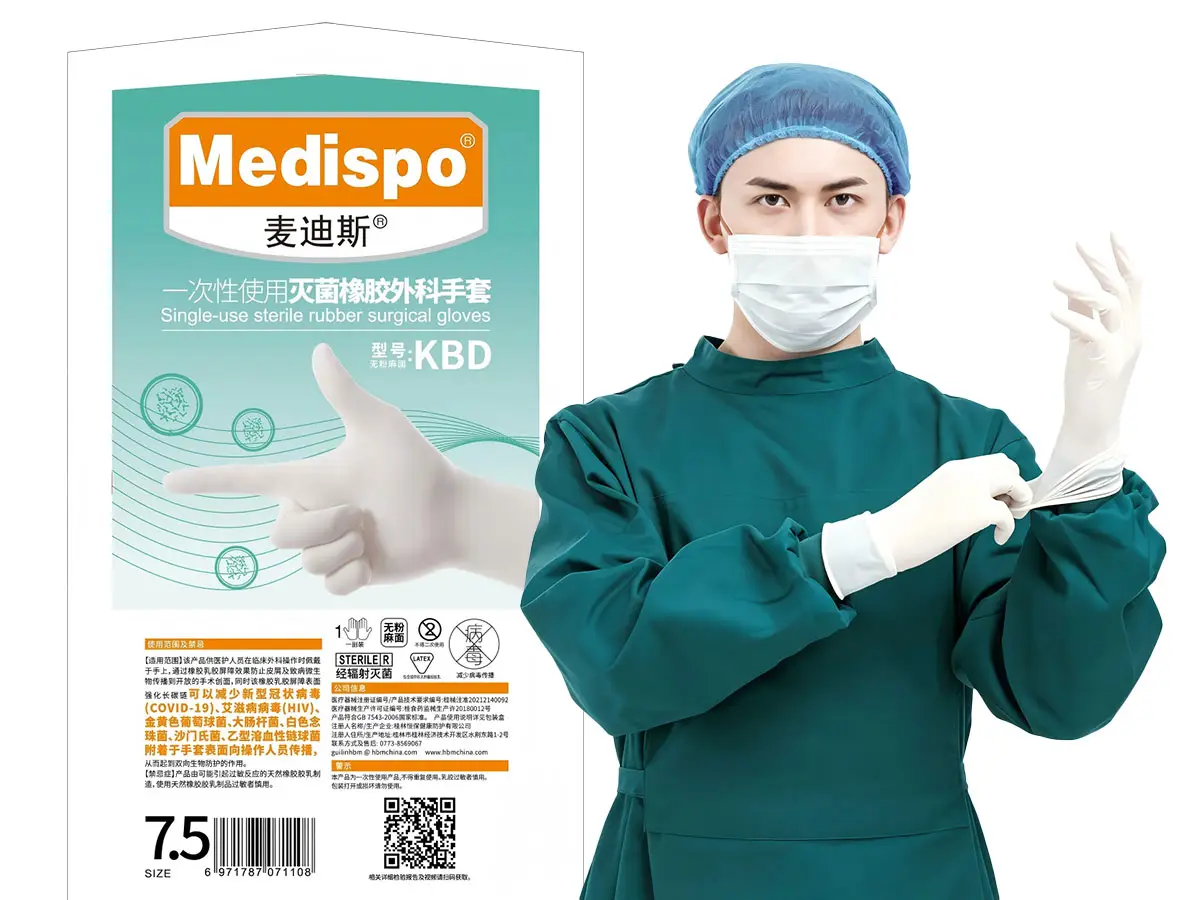
Polyisoprene surgical gloves are sterile, powder-free surgical gloves made from polyisoprene — a synthetic, latex-free polymer engineered to combine the elasticity and strength of natural rubber latex with a formulation that contains none of the proteins associated with latex allergy. They have become a mainstream option for surgical teams and procurement specialists who need a non-latex glove that performs close to natural latex.

What Is Polyisoprene?
Polyisoprene is a synthetic rubber produced from isoprene monomers. Its molecular structure closely resembles the natural rubber polymer found in natural latex, which is why the two materials feel similar in elasticity, strength and tactile response. The critical difference is in the composition: because polyisoprene is synthesized in a controlled manufacturing process, it contains none of the plant proteins present in natural rubber latex — the proteins that can trigger Type I latex allergy in sensitized individuals.
This makes polyisoprene a natural fit for hospitals and distributors looking to offer a latex-free option without compromising on surgical performance.
Why Choose Polyisoprene Surgical Gloves?
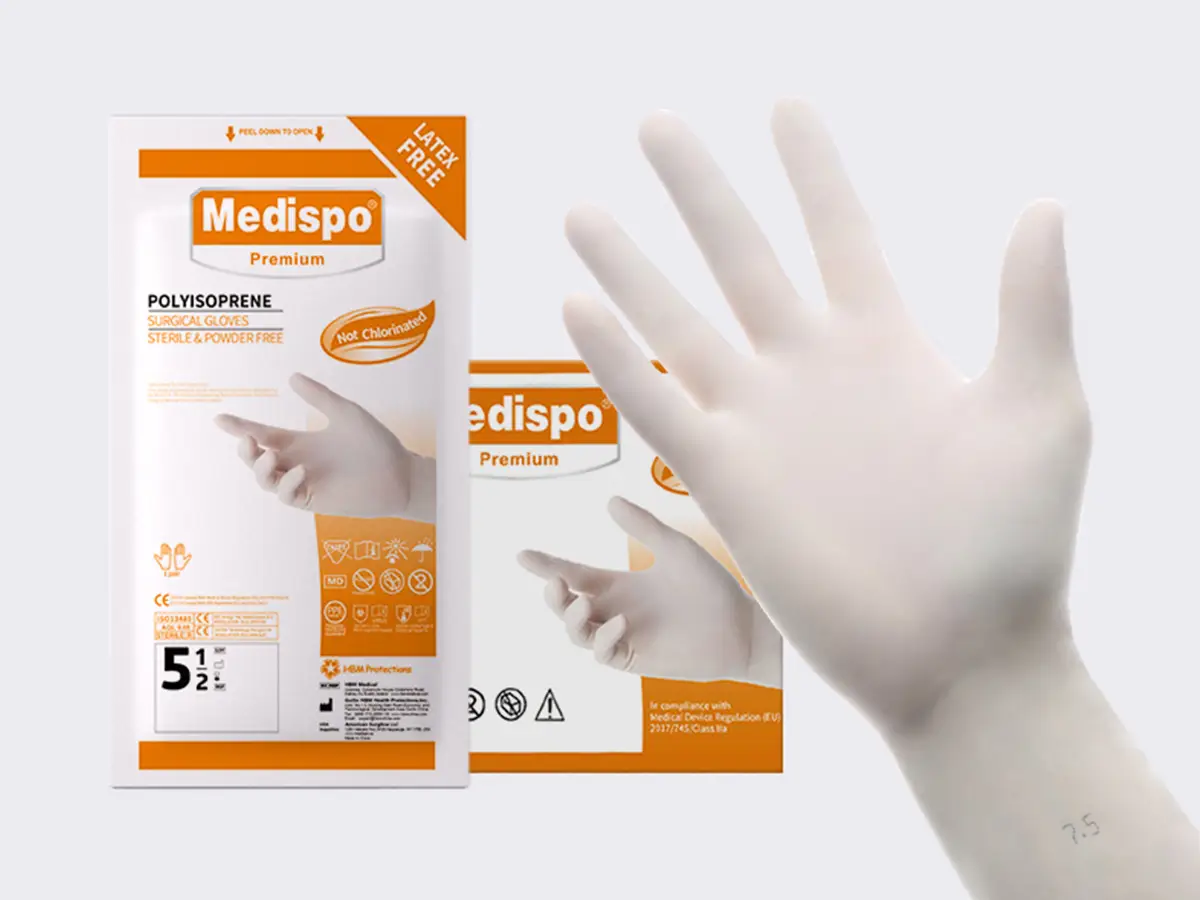
Latex-free and protein-free. Polyisoprene gloves contain no latex proteins, making them suitable for users with latex sensitivity or allergy. Medispo polyisoprene gloves are tested according to ISO EN 10993, covering primary skin irritation, dermal sensitization and cytotoxicity.
Low-additive formulation. Medispo PI gloves use a chlorine-free formulation and do not contain DPG, thiurams, MBT, PPD, ZDBC or DTU — accelerators commonly associated with allergic contact dermatitis. Accelerator use is limited to ZDEC.
Comfort for long procedures. The super-soft polyisoprene formulation is designed to reduce hand fatigue during extended wear, with a close, comfortable fit that surgical teams describe as a “second skin” feel.
Strength that meets surgical demands. The material is tough enough to protect wearers and patients from pathogens, and is designed to exceed the strength requirements of US and EU international standards.
Easy donning and a consistent . Medispo PI gloves feature a skin-friendly polymer coating for easy donning — even with damp hands — and a calibrated micro-textured outer surface that is monitored and controlled during production, with each lot passing internal grip controls before release.
Why Choose Polyisoprene Surgical Gloves?
Feature | Feature Polyisoprene (Medispo PI) | Natural Latex (Medispo Latex) |
|---|---|---|
Latex proteins | None — protein-free synthetic | Present in natural rubber latex |
Skin compatibility | Suited to latex-sensitive users | Risk for users with latex allergy |
Feel | Super-soft, elastic, close to latex | Natural elasticity and tactility |
Additive policy | Chlorine-free; ZDEC only (CAS No. 14324-55-1); no DPG/thiurams/MBT/PPD/ZDBC/DTU | Same controlled policy |
Sterilization | Sterile, E-Beam | Sterile, E-Beam |
Powder | Powder-free | Powder-free (powdered variant also available) |
Shelf life | 3 years | 3 years (some variants 5 years) |
Key standards | EN 455 1-4, ASTM D3577, ISO 10993, EU MDR, FDA 510(k), AS/NZS 4179 | Same standard set |
*Both PI and Latex gloves are manufactured in our ISO 13485:2016 certified factory.
The Medispo Polyisoprene Range
HBM Protections manufactures its surgical gloves under the Medispo brand. The polyisoprene range covers five product lines, each designed for a different clinical need:
- Medispo PI— the all-round standard option, in white cream, with a fingertip thickness of 0.23 mm and an anatomical, hand-specific design.
- Medispo PI Sensitive— a slightly thinner build (0.21 mm fingertip) for surgeons who demand higher tactile sensitivity.
- Medispo PI Orthopaedic— the thickest glove in the PI portfolio (0.26 mm fingertip) for added protection, in brown to reduce glare from surgical lighting.
- Medispo PI Underglove— a blue underglove designed for double gloving, where the distinct colour makes perforations in the outer glove quickly visible.
- Medispo PI Double Gloving— a pre-matched system containing one pair of PI outer gloves and one pair of half-a-size-larger blue undergloves in a single pouch.
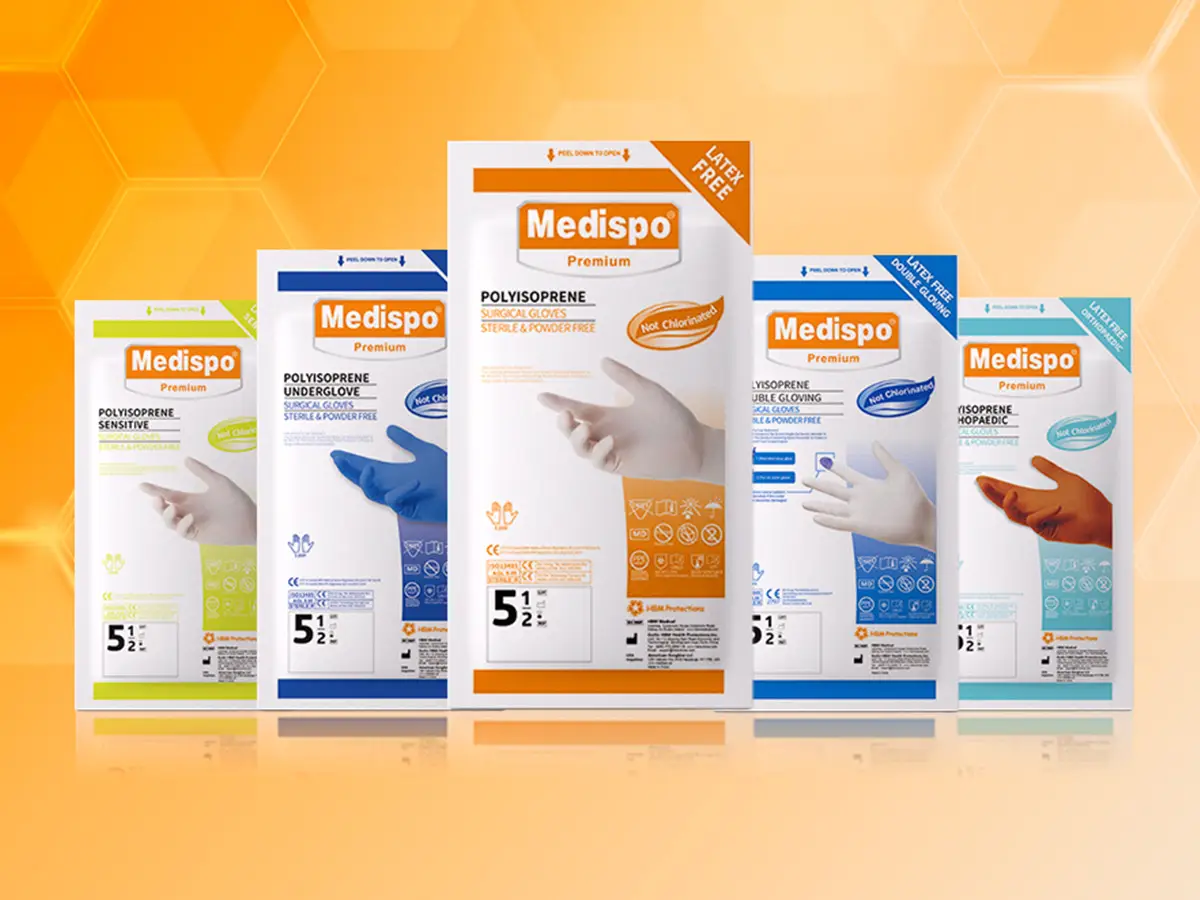
All Medispo PI gloves share the same core specification: powder-free, sterile via E-Beam, beaded cuff, micro-textured calibrated grip, sizes 5.5 to 9, anatomical design with forward thumb ball, an AQL of 0.65 (typically 0.30–0.45 in production), and a 3-year shelf life. Packaging options include full-length or square half-fold peel pouches and paper–paper packaging, supplied at 1 pair per pouch, 50 pairs per inner box, and 200 or 400 pairs per shipping carton.
Standards and Compliance
Polyisoprene surgical gloves are regulated medical devices, and buyers should verify compliance before sourcing. The Medispo PI range is manufactured under:
- Product standards:EN 455 1-4, EN ISO 374 1-5:2016, EN ISO 21420:2019, ASTM D3577, ASTM D6978 (chemotherapy drug permeation), ASTM F739, ISO 10993, AS/NZS 4179, ISO 10282, JIS T9107.
- Regulatory approvals:EU MDR 2017/745, FDA 510(k) clearance, MDSAP, and PPE Regulation (EU) 2016/425.
- Quality systems:ISO 9001, ISO 13485:2016, ISO 14001.
- Independent third-party testing and certification by notified bodies and laboratories including BSI, SATRA, ARDL, TÜV and SGS.
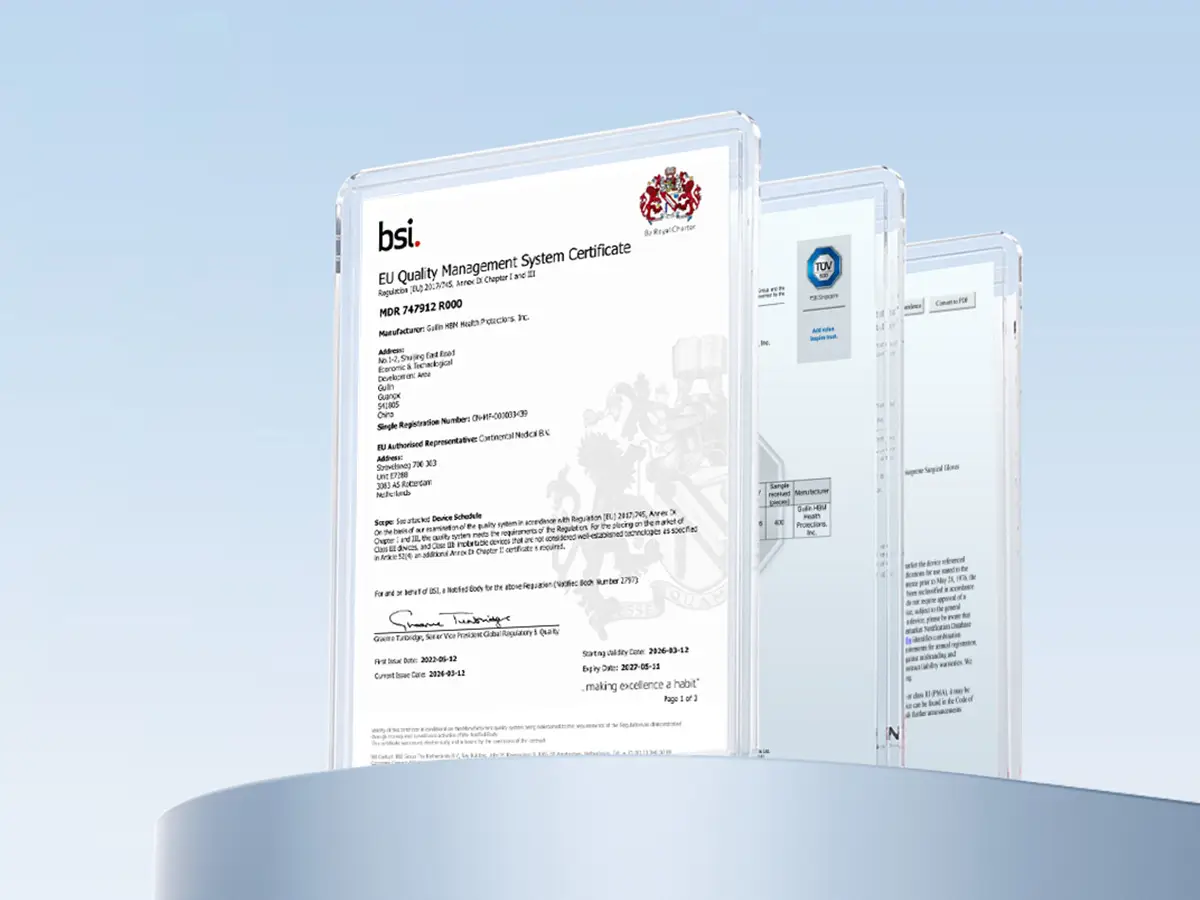
In addition, every glove is 100% air-leak tested and visually inspected, and production uses computerized control with predictive quality analytics — details worth asking any manufacturer about during supplier evaluation.
Who Should Use Polyisoprene Surgical Gloves?
Polyisoprene gloves are a strong choice when:
- Latex sensitivity is a concern— for staff or patients with latex allergy, PI gloves provide a protein-free alternative.
- Comfort matters over long procedures— the super-soft formulation is designed to reduce fatigue during extended surgery.
- Higher tactile sensitivity is needed— the Sensitive variant supports delicate procedures.
- Extra protection is required— the Orthopaedic variant offers the thickest build in the PI portfolio, and the blue Underglove / Double Gloving system supports perforation detection in high-risk settings.
How to Choose
Start with three questions: Who will wear the gloves (any latex-sensitive users)? What procedures will they be used for (standard, orthopaedic, delicate)? And what compliance documentation does your market require (EN 455, ASTM, FDA or MDR)? Then evaluate manufacturers on certified quality systems, independent test reports, and production controls — not just on product claims.